Breed Guide6 min read

Bengal

Bengal Cat · Leopard Cat (informal) · Domestic Bengal

  • Good with other pets
  • Easy to train
  • Low-shedding
  • Good with children
  • Affectionate
  • Low grooming commitment
  • Apartment-friendly
Bengal Breed Guide
Temperament

Confident, curious, bold and highly interactive. Bengals form strong bonds with their primary person but on their own active, investigative terms rather than as passive lap cats. They are playful well into adulthood, often dog-like in their engagement — learning to retrieve, playing fetch and walking on a harness and leash when properly introduced. Vocal but not as persistently loud as the Siamese — they communicate with chirps, chatter and a variety of vocalisations. Not recommended for very quiet or low-stimulation households.

Lifespan
12–16 years with good care
Adult Size
Medium. Males 4.5–7 kg; females 3.5–5 kg. Athletic, lean and muscular.
Care Level
High
Coat Type

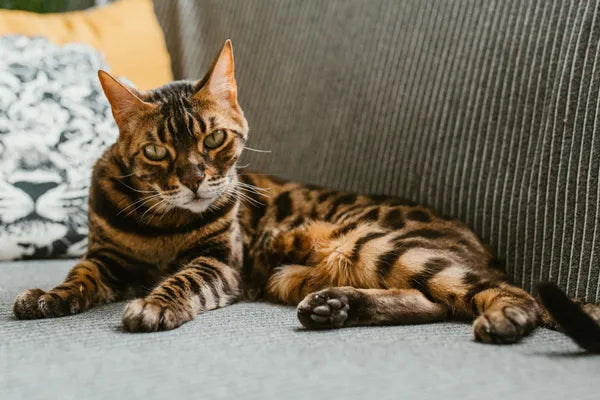
Short to medium, dense and incredibly soft — often described as having a pelt-like texture rather than a typical cat coat. Minimal shedder relative to coat density. Not hypoallergenic but low-shedding.

Energy Level

Very High. One of the most energetic and active domestic cat breeds available.

is this the right breed for you?

Owner Suitability

Intermediate to Advanced. The Bengal is a highly active, intelligent and demanding breed that requires substantial daily stimulation and engagement. Not recommended for first-time cat owners or those seeking a calm, quiet lap cat. Extraordinarily rewarding for the right owner.

Where the breed comes from

Origin & History

The Bengal was developed in the United States beginning in the 1970s, when geneticist Dr Jean Mill began crossing domestic cats with the Asian Leopard Cat (Prionailurus bengalensis) with the aim of creating a domestic cat with the striking spotted coat of a wild cat but the temperament of a companion animal. Separately, Dr Willard Centerwall at Loyola University crossed Asian Leopard Cats with domestic cats as part of research into feline leukaemia immunity. Jean Mill acquired some of these cats and continued breeding, eventually reaching the generations (F5 and beyond) at which Bengal cats could be considered fully domesticated in temperament. TICA recognised the Bengal as a championship breed in 1991. The Bengal takes its name from the Asian Leopard Cat's scientific name (Prionailurus bengalensis). In Australia, Bengal cats must be at least five generations (F5) removed from their wild ancestor — early-generation Bengals (F1–F4) are prohibited. All cats should be kept strictly indoors or in contained enclosures in Australia due to their potential impact on wildlife.

Get it right early

Tips for First-Time Owners

  1. 1 Be honest about your lifestyle before purchasing — a Bengal in a low-stimulation, low-interaction environment becomes destructive, vocal and miserable. This is one of the highest-engagement breeds available.
  2. 2 Source only from an F5+ individual from a TICA or ACF-registered breeder who health-screens for PRA (PRA-b DNA test), PKD (Pyruvate Kinase Deficiency) and cardiac HCM — early-generation Bengals are prohibited in Australia.
  3. 3 Invest in a large, tall cat tree, wall-mounted cat shelving and an enclosed outdoor cat run before the cat arrives — these are necessities, not luxuries, for this breed.
  4. 4 Consider a companion cat of similar energy level if the household is regularly away — Bengals do not cope well with under-stimulation and a high-energy companion provides ongoing enrichment.
  5. 5 Pet insurance from day one — HCM monitoring, PRA and PKD management over a 12–16 year lifespan represent a meaningful financial commitment.
Daily Routine

Care & Exercise

The Bengal is one of the most high-maintenance breeds in terms of daily engagement, stimulation and enrichment provision. They are intelligent, athletic and curious to the point of being demanding — a Bengal without adequate stimulation becomes destructive, loud and difficult to manage. They typically love water and may investigate the shower, sink or fish tank. They are climbers and explorers who use every vertical surface available. Keep strictly indoors or within a large, secure, fully enclosed outdoor cat run. Standard indoor cat-proofing is insufficient for a Bengal — secure all cupboards, refrigerators, windows and any space a highly athletic, problem-solving cat could access. Early-generation Bengals (F1–F4) are prohibited in Australia — source only F5+ individuals from reputable, TICA-registered breeders.

Coat Care Routine

Grooming

Very low maintenance for the coat itself — the short, pelt-like coat requires only a weekly wipe-down with a damp chamois or rubber grooming mitt. Bengals are fastidious self-groomers and rarely need bathing. However, grooming time is an opportunity to check for skin conditions and build a handling relationship. Clean ears weekly — Bengals may be prone to ear infections. Brush teeth regularly. Trim nails frequently — every two weeks is appropriate given the Bengal's active climbing and scratching behaviour. Provide multiple appropriate scratching surfaces or the furniture will serve as alternatives.

Did you know

Fun Facts

The Bengal's coat has a unique physical property called 'glitter' — each individual hair shaft has a light-refracting microstructure that causes the coat to appear to shimmer or sparkle in natural light. This property is present in approximately 25% of Bengals and is most visible in the brown and silver colourations. It is one of the most distinctive and sought-after visual characteristics in the breed and has no equivalent in any other domestic cat breed.

The Bengal is one of the only domestic cat breeds to have a well-documented love of water — attributed to the Asian Leopard Cat ancestor, which inhabits areas near water and actively hunts fish. Many Bengals will voluntarily enter the shower, bat water out of taps, investigate fish tanks and drink from running water rather than still bowls. This trait is considered characteristic of the breed and is observed even in individuals many generations from their wild ancestor.

Early-generation Bengals (F1–F4) are prohibited from importation and private ownership in most Australian states due to biosecurity concerns about the potential hybridisation of early-generation individuals with feral cats and their impact on native wildlife — the Asian Leopard Cat's significantly enhanced predatory ability in early generations is the primary concern.

Day-to-day interaction

Handling & Socialisation

Socialisation from kittenhood is important — confident handling, varied exposure to environments and sounds, and early introduction to the harness and leash (if outdoor enrichment is planned through contained walks) all build a well-adjusted adult. Bengals can coexist with other cats and cat-friendly dogs when introduced gradually, though their high energy can overwhelm more sedentary companions. Always supervise with small animals — the prey drive is significant.

Keep them stimulated

Enrichment

Bengals require the highest level of environmental enrichment of any domestic breed. They are climbers — tall, sturdy cat trees and wall-mounted cat shelving are essential, not optional. They are problem-solvers — puzzle feeders, rotating novel toys and hiding food around the environment provide cognitive stimulation. They are hunters — daily interactive play sessions with wand toys mimicking prey movement are critical. Many Bengals learn to walk on a harness and leash, providing safe outdoor enrichment. Some enjoy cat wheels (motorised or manual) for sustained physical exercise. A companion cat of similar energy level helps manage their stimulation needs. An outdoor enclosed cat run significantly improves quality of life for a contained Bengal.

What to watch for

Common Health Issues

Hypertrophic Cardiomyopathy (HCM): The most significant cardiac concern. Echocardiographic screening of breeding cats by a registered cardiologist is recommended.

Progressive Retinal Atrophy (PRA): A Bengal-specific PRA variant (PRA-b) has been identified; DNA testing is available. Source from breeders who PRA-test.

Pyruvate Kinase Deficiency (PKD): A hereditary anaemia; DNA testing is available. Different from Polycystic Kidney Disease in other breeds.

Tritrichomonas foetus: A protozoal intestinal infection causing chronic diarrhoea; more commonly documented in cattery-housed Bengals. Ask breeders about testing protocols.

Lexical Neuropathy: A hereditary neurological condition causing weakness or paralysis; documented in some Bengal lines.

Obesity: Uncommon given the breed's high activity level, but portion control remains important.

Everything you need

Essentials Shopping List

Setup checklist

  • Quality adult cat food (high-protein, meat-first; age-appropriate)
  • Stainless steel or ceramic food and water bowls
  • Running water fountain (strongly recommended — Bengals prefer moving water)
  • Litter tray (large; one per cat plus one extra — Bengals are fastidious)
  • Quality clumping litter
  • Very tall, heavy, sturdy cat tree
  • Wall-mounted cat shelving system (multiple levels)
  • Large enclosed outdoor cat run or catio (strongly recommended)
  • Cat wheel (motorised or manual — excellent for Bengal energy)
  • Interactive wand toys (daily use; essential)
  • Puzzle feeders (multiple; high difficulty)
  • Fetch toys
  • Harness and leash (for supervised outdoor enrichment if trained from kitten)
  • Rubber grooming mitt or chamois
  • Nail clippers (trim every two weeks)
  • Cat carrier
  • Pet insurance (from day one)
FAQ

Commonly Asked Questions

  • Are early-generation Bengals legal in Australia?

    No. Only F5 (fifth generation) and beyond are permitted. Import of early-generation Bengals (F1–F4) is prohibited. Confirm the generation documentation of any Bengal before purchasing.

  • Do Bengals really like water?

    Yes — it is a well-documented breed characteristic attributed to the Asian Leopard Cat heritage. Many Bengals actively seek water, investigate taps and showers, and prefer running water to still bowls.

  • Is a Bengal suitable for apartment living?

    Only with significant enrichment provision — tall cat trees, wall shelving, interactive daily play, puzzle feeders and ideally a companion cat. A Bengal in a small, under-stimulated apartment becomes problematic very quickly.

  • What is the 'glitter' coat?

    A light-refracting microstructure in each individual hair that causes the coat to appear to shimmer in natural light. Present in approximately 25% of Bengals, particularly in brown and silver colourations. It is cosmetic and has no health implications.

  • What health tests should I ask a breeder for?

    PRA-b DNA test (Bengal-specific PRA); Pyruvate Kinase Deficiency (PKD) DNA test; cardiac HCM echocardiographic screening; Tritrichomonas foetus testing protocol.

Need help?Our specialists are in-store every day to help with sourcing, training and supplies.

Visit Kellyville Pets