Breed Guide6 min read

Siamese

  • Apartment-friendly
  • Easy to train
  • Low grooming commitment
  • Good with other pets
  • Affectionate
  • Low-shedding
  • Good with children
Siamese Breed Guide
Temperament

Intensely social, highly vocal and deeply loyal — the Siamese has been described as the most dog-like of all cat breeds. They form extremely strong bonds with their primary person, follow them constantly, engage in persistent conversation with a loud, distinctive voice, and demand involvement in all household activities. They are opinionated, intelligent and can be demanding. For owners who welcome a highly interactive feline companion, the relationship is extraordinarily rewarding. For owners seeking independence and quiet, the Siamese is a poor match.

Lifespan
12–20 years — exceptionally long-lived; 15–18 years is common and 20+ is documented
Adult Size
Medium. Males 4–6 kg; females 2.5–4.5 kg. Modern type: long, tubular, elegant; Traditional type: more moderate and rounded.
Care Level
Medium
Coat Type

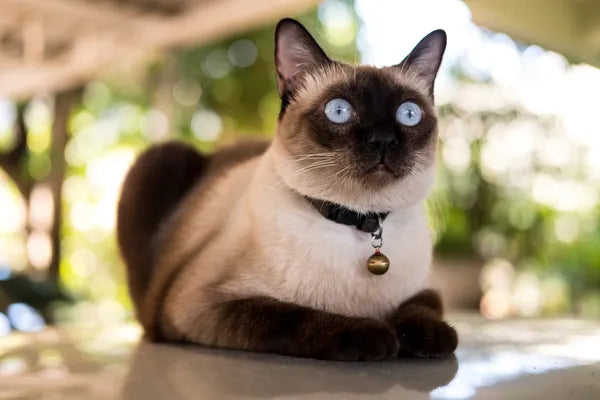
Very short, fine, close-lying single coat. Minimal shedder — one of the lowest-shedding cat breeds available. Not hypoallergenic, though the low coat volume reduces allergen dispersal compared to heavy-shedding breeds.

Energy Level

High. Highly active, inquisitive and interactive — requires significant daily engagement.

is this the right breed for you?

Owner Suitability

Intermediate. Best suited to experienced cat owners or first-time owners who have specifically researched the Siamese temperament and are fully prepared for its vocal, social and demanding nature. Not recommended for owners who prefer a quiet, independent cat or who are away from home for long periods without providing a companion.

Where the breed comes from

Origin & History

The Siamese is one of the oldest and most historically documented cat breeds in the world, originating in Thailand (historically called Siam). Depictions of colourpointed cats appear in the Thai Tamra Maew (Cat Book Poems), a manuscript dating from the Ayutthaya Kingdom period (1351–1767). The breed was first introduced to the Western world at the Crystal Palace Cat Show in London in 1871 and to the United States in the late 19th century. Over the following century, show breeders progressively selected for more extreme features — a longer, finer body and an increasingly wedge-shaped head — producing what is now called the Modern Siamese. The Traditional or Applehead Siamese, with a rounder head and sturdier build, has experienced renewed interest. Both types exist in Australian breeding. Registered with the ACF and equivalent bodies. Keep strictly indoors in Australia.

Get it right early

Tips for First-Time Owners

  1. 1 Never acquire a Siamese if you are away from home for long periods without providing a companion cat — the breed's social demands are genuine and unmet social needs produce significant behavioural and welfare problems.
  2. 2 Establish a dental care routine from kittenhood — Siamese are notably prone to gingivitis and periodontal disease, and early brushing is the most effective prevention.
  3. 3 Source from a breeder who cardiac-screens breeding cats and discusses amyloidosis history honestly — this Siamese-specific hereditary liver condition is not commonly tested for but should be asked about.
  4. 4 Accept and value the vocalisation — the Siamese 'talks' persistently and loudly. This is the breed's nature, not a problem to solve. If you find it disruptive rather than endearing, a different breed will suit you better.
  5. 5 Invest in pet insurance — the Siamese's potential 20-year lifespan combined with dental, cardiac and liver disease predispositions makes insurance valuable from the outset.
Daily Routine

Care & Exercise

The Siamese requires substantially more daily interaction and stimulation than most cat breeds. They are not suited to long periods of solitude — a Siamese left alone for extended daily periods without a companion cat will develop vocal, anxious or destructive behaviours. Feed a quality diet in measured portions. Annual veterinary checks including dental assessment and cardiac screening are important. Keep strictly indoors.

Coat Care Routine

Grooming

One of the lowest-maintenance coats of any cat breed. The short, single-layer coat requires only a weekly wipe-down with a chamois leather or rubber grooming mitt to remove minimal loose hair. The coat rarely needs bathing. Clean ears weekly. Brush teeth regularly — Siamese have a noted predisposition to dental and gum disease. Trim nails every two to three weeks.

Did you know

Fun Facts

The Siamese is the only cat breed whose colourpoint pattern (dark extremities, pale body) is caused by a temperature-sensitive enzyme — the gene that controls pigment production is active only in cooler parts of the body (the extremities) and inactive in warmer areas (the body core). This is why Siamese kittens are born completely white — the womb temperature is uniform — and develop their points only after birth as extremities cool. It is also why Siamese cats kept in very warm climates may develop paler points than usual.

The voice of the Siamese — a loud, low-pitched, persistent call described as resembling a human baby's cry — was the specific trait that made it so renowned and so polarising in the early days of Western cat fancy. Early descriptions of the breed in Victorian England frequently mention the extraordinary vocalisation, with some accounts describing it as unsettling and others as endearing. The vocal trait has remained characteristic of the breed through all subsequent breeding.

The Thai Tamra Maew — the Cat Book Poems of Thailand — contains some of the oldest known written descriptions of specific cat breeds in the world, with colourpointed cats described in terms that clearly match the modern Siamese. Some manuscripts are estimated to date from the Ayutthaya period (1351–1767), making the Siamese one of the best-documented ancient cat breeds in history.

Day-to-day interaction

Handling & Socialisation

Early socialisation and kittenhood handling are important, though the Siamese is naturally confident and outgoing. Their vocal, persistent nature means they will communicate discomfort, boredom or displeasure clearly and persistently — owners must learn to read and respond to this communication rather than attempting to suppress it. Introduce other pets gradually; Siamese generally get along well with other cats, particularly other Siamese or social breeds. They are good with gentle, interactive children.

Keep them stimulated

Enrichment

The Siamese must be actively engaged daily — this is a working-intelligence breed that becomes vocal, anxious and potentially destructive without appropriate stimulation. High-quality interactive play sessions of at least 15–20 minutes twice daily are essential. Feather wands, puzzle feeders, retrieving games and interactive toys all suit the breed's intelligence and energy. A companion cat is the single most effective enrichment. Tall cat trees, window perches and varied environmental complexity provide independent stimulation between play sessions.

What to watch for

Common Health Issues

Hypertrophic Cardiomyopathy (HCM): Cardiac screening of breeding cats is recommended. Annual auscultation for adults.

Amyloidosis: A specific hereditary condition in Siamese cats in which amyloid protein deposits in the liver — causing progressive liver failure. This is a Siamese-specific concern not common in most other breeds. Source from lines with a clear history of this condition.

Dental Disease and Gingivitis: Siamese have a notable predisposition to gingivitis and periodontal disease. Daily or alternate-day tooth brushing from kittenhood is strongly recommended.

Progressive Retinal Atrophy (PRA): Documented in some Siamese lines; ask breeders about eye health history.

Strabismus (crossed eyes) and Nystagmus: Historically common — associated with the colourpoint gene's effect on the visual pathway. Modern breeding has reduced frequency but some individuals still display these traits; both are cosmetic rather than functionally impactful in most cases.

Asthma and Respiratory Conditions: Siamese are more prone to asthma and respiratory conditions than many breeds.

Everything you need

Essentials Shopping List

Setup checklist

  • Quality adult cat food (high-protein; age-appropriate)
  • Stainless steel or ceramic food and water bowls
  • Water fountain
  • Litter tray (one per cat plus one extra)
  • Quality clumping or crystal cat litter
  • Tall sisal scratching post
  • Cat tree with multiple levels
  • Window perch
  • Interactive wand toys and feather toys (daily use)
  • Puzzle feeders
  • Chamois cloth or rubber grooming glove
  • Nail clippers
  • Cat toothbrush and cat-safe toothpaste (dental care — important)
  • Cat carrier
  • Indoor cat-proofed environment
  • Pet insurance (from day one)
FAQ

Commonly Asked Questions

  • Is a Siamese suitable for apartment living?

    Yes, provided their social needs are met — a companion cat, interactive daily play and owner engagement. They are not suited to quiet, low-interaction apartment life regardless of size.

  • Are Siamese hypoallergenic?

    No cat breed is fully hypoallergenic. The Siamese's minimal shedding coat reduces allergen dispersal compared to heavy-shedding breeds, which may benefit mild allergy sufferers, but they still produce Fel d 1 protein.

  • What is amyloidosis?

    A Siamese-specific hereditary condition in which amyloid protein deposits in the liver, causing progressive liver failure. It is less commonly screened for than HCM but prospective owners should ask breeders about family history.

  • Why does my Siamese talk so much?

    Because it is a Siamese. The breed's vocalisation is an intrinsic characteristic — persistent, loud and communicative. It is not a problem behaviour and cannot be reliably trained away. If you find it endearing, you have chosen the right breed.

  • What health tests should I ask a breeder for?

    Cardiac screening (echocardiography); amyloidosis family history; dental health history; PRA eye health history.

Need help?Our specialists are in-store every day to help with sourcing, training and supplies.

Visit Kellyville Pets