Breed Guide6 min read

Burmese

Australian Burmese (slightly rounder type recognised in Australia) · European Burmese

  • Suitable for first-time owners
  • Good with children
  • Easy to train
  • Low grooming commitment
  • Affectionate
  • Apartment-friendly
  • Low-shedding
  • Good with other pets
Burmese Breed Guide
Temperament

Described by owners as 'part cat, part dog' — the Burmese is intensely people-oriented, follows its owners from room to room, greets them at the door, enjoys retrieving toys, and forms deep bonds. Highly vocal without being shrill — they maintain a running commentary with a soft, musical voice. Playful well into adulthood and older age; many Burmese retain kitten-level energy and enthusiasm for play well past 10 years. Extraordinarily affectionate and tactile.

Lifespan
15–20 years — exceptionally long-lived; 18–20 years is not unusual with excellent care
Adult Size
Medium. Males 4–6 kg; females 3–4.5 kg. Deceptively heavy for their size — very muscular and compact.
Care Level
Medium
Coat Type

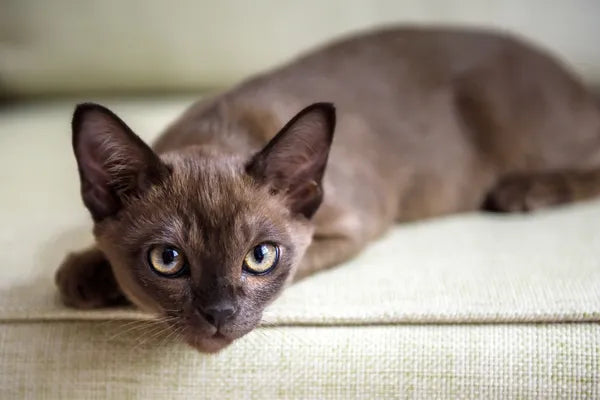
Short, fine, glossy, close-lying single coat. Very low shedder. Silky texture with a natural sheen. Not hypoallergenic but one of the lower-shedding shorthaired breeds.

Energy Level

High. Highly active, playful and interactive — requires substantial daily engagement.

is this the right breed for you?

Owner Suitability

Excellent for families, experienced cat owners, active individuals and those who want a highly interactive feline companion. Not recommended for owners who are away for long periods without providing a companion cat. Burmese are one of the most demanding breeds for social interaction.

Where the breed comes from

Origin & History

The modern Burmese breed traces to a single cat — Wong Mau — a small, dark brown cat imported from Burma to the United States in 1930 by Dr Joseph Cressman Thompson. Wong Mau was bred to a Siamese, and subsequent selective breeding produced the foundation of the Burmese breed as recognised today. The breed was developed along slightly different lines in the UK and Australia — the Australian Burmese type, recognised by the ACF, has a slightly rounder head and more substantial body than the American Burmese. In Australia, Burmese cats are one of the most popular pedigree breeds and have been bred locally since the 1950s. Registered with the ACF and equivalent bodies. All cats should be kept strictly indoors in Australia.

Get it right early

Tips for First-Time Owners

  1. 1 Never leave a Burmese home alone for extended periods without a companion cat — this is the most important lifestyle consideration for this breed. Separation-related problems are the most common welfare issue in solo-housed Burmese.
  2. 2 Source from an ACF-registered breeder who tests for the Burmese Head Defect, cardiac-screens breeding cats and has a clear dental health history in their lines.
  3. 3 Establish a dental care routine from kittenhood — Burmese are notably predisposed to dental disease and early brushing is the most effective prevention.
  4. 4 Feed a high-quality, protein-rich, low-carbohydrate diet and monitor weight carefully — diabetes is reported at higher rates in this breed and weight management is the primary preventative.
  5. 5 Invest in pet insurance — dental treatment, cardiac management and diabetes care can generate significant veterinary costs over what can be a 20-year lifespan.
Daily Routine

Care & Exercise

The Burmese is one of the most interactive and socially demanding of all cat breeds. It must not be left alone for extended periods without a companion cat — a Burmese without adequate social interaction develops significant behavioural problems including separation anxiety and destructive behaviour. Feed a quality, protein-rich diet in measured portions. Annual veterinary checks including dental assessment are important. Keep strictly indoors in Australia. Source from ACF-registered breeders who health-screen for HCM and cranial deformities.

Coat Care Routine

Grooming

One of the lowest-maintenance coats of any pedigree breed. The short, glossy, single-layer coat requires only a weekly wipe-down with a chamois leather cloth or rubber grooming glove to remove loose hair and maintain its characteristic shine. Occasional bathing every few months. Clean ears weekly. Brush teeth regularly — Burmese have a noted predisposition to dental disease. Trim nails every two to three weeks. The coat's natural gloss is best maintained through high-quality nutrition rather than intensive grooming.

Did you know

Fun Facts

The Burmese breed traces entirely to one female cat — Wong Mau, imported from Burma to the United States in 1930. DNA analysis has since confirmed that Wong Mau was herself a natural hybrid of a Burmese-type cat and a Siamese, which explains why early breeding of Burmese sometimes produced Siamese-patterned kittens until the gene pool was sufficiently established.

The Australian Burmese is recognised internationally as a distinct type from the American Burmese — with a broader head, rounder eyes and more substantial body that more closely resembles the original Burmese cats developed in the UK in the mid-20th century. Australia has been breeding Burmese since the 1950s and the ACF-registered type reflects decades of local development.

Burmese are among the longest-lived of all pedigree cat breeds — lifespans of 18–20 years are well documented in the breed, and there are credible reports of individuals reaching 24–25 years. This extraordinary longevity makes them one of the most significant long-term companionship commitments available in the pedigree cat world.

Day-to-day interaction

Handling & Socialisation

Socialise from kittenhood with varied people, environments and sounds — Burmese are generally confident and adaptable but benefit from early positive exposure. They are excellent with children given their interactive, tolerant and enthusiastic nature. Introduce other pets gradually; Burmese typically get along well with other cats and even dogs when introduced respectfully. Their intelligence means they learn quickly — both good habits and bad ones. Redirect unwanted behaviours promptly and consistently.

Keep them stimulated

Enrichment

Burmese need intensive daily enrichment — this is a working-intelligence cat that becomes bored and problematic without it. High-quality interactive play sessions of at least 15–20 minutes twice daily are recommended. Feather wands, laser pointers, puzzle feeders and retrieving games are all enthusiastically received. A tall, sturdy cat tree provides essential climbing and vantage-point opportunities. A companion cat is the single most effective enrichment for a Burmese, providing social engagement throughout the day. Rotate toys regularly.

What to watch for

Common Health Issues

Hypertrophic Cardiomyopathy (HCM): The most significant hereditary health concern. Echocardiographic screening of breeding cats is recommended.

Burmese Head Defect (Cranial Deformity): A serious inherited skull malformation documented in some Burmese lines, causing kittens to be born with severely deformed skulls — a recessive gene. Responsible breeders test for and breed away from this defect. Ask breeders specifically about their approach.

Dental Disease: Burmese have a notable predisposition to dental disease — tartar accumulation, gingivitis and early tooth loss. Daily or alternate-day tooth brushing from kittenhood is strongly recommended.

Diabetes Mellitus: Reported at higher rates in Burmese than many other breeds; weight management and a low-carbohydrate, protein-rich diet are the primary preventative measures.

Okay Hypokalaemia: Periodic muscle weakness due to low blood potassium; more common in some Burmese lines; DNA testing is available in some countries.

Everything you need

Essentials Shopping List

Setup checklist

  • Quality adult cat food (high-protein, low-carbohydrate; age-appropriate)
  • Stainless steel or ceramic food and water bowls
  • Water fountain
  • Litter tray (one per cat plus one extra)
  • Quality clumping or crystal cat litter
  • Tall, sturdy sisal scratching post
  • Large, robust cat tree with multiple levels
  • Window perch or cat shelving
  • Interactive wand toys and feather toys
  • Puzzle feeders
  • Chamois cloth or rubber grooming glove (weekly use)
  • Nail clippers
  • Cat toothbrush and cat-safe toothpaste (dental care — important)
  • Cat carrier
  • Indoor cat-proofed environment
  • Pet insurance (from day one)
FAQ

Commonly Asked Questions

  • Are Burmese good with children?

    Exceptionally — their interactive, playful, tolerant and affectionate nature makes them one of the most child-friendly cat breeds available.

  • Can a Burmese be kept as a solo cat?

    Possible but not ideal. Burmese are intensely social and do not thrive without companionship. If the household is away regularly, a companion cat is strongly recommended.

  • What is the Burmese Head Defect?

    A serious inherited skull malformation that causes affected kittens to be born with a severely deformed cranium. It is a recessive gene and responsible breeders test for and breed away from it. Always ask your breeder about their testing protocols.

  • How long do Burmese live?

    15–20 years is typical; some individuals reach 20+ years. Source from health-screened breeders and provide excellent care for a potential two-decade commitment.

  • What health tests should I ask a breeder for?

    Cardiac screening (echocardiography); Burmese Head Defect testing; dental health history in breeding lines; diabetes history.

Need help?Our specialists are in-store every day to help with sourcing, training and supplies.

Visit Kellyville Pets