Breed Guide6 min read

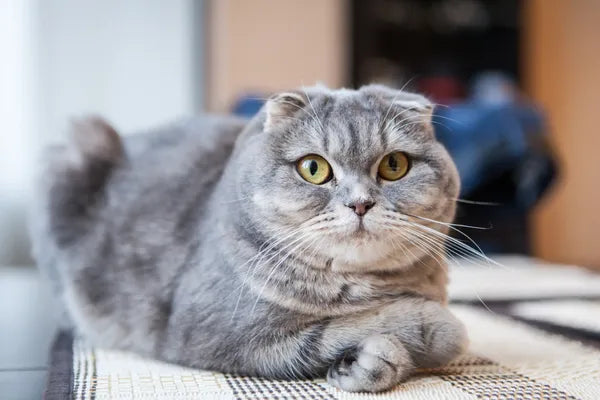
Scottish Fold

Scottish Fold Longhair (long-coated variant) · Highland Fold (alternative name for longhaired Scottish Fold) · Scottish Straight (straight-eared Scottish Fold — same breed, unfolded ears)

  • Apartment-friendly
  • Low exercise needs
  • Calm temperament
  • Good with other pets
  • Low grooming commitment
  • Easy to train
  • Good with children
  • Affectionate
Scottish Fold Breed Guide
Temperament

Sweet-natured, calm and adaptable. Scottish Folds are generally quiet, gentle and enjoy human company without being demanding. They tend to form close bonds with their primary person. Typically good with children and other pets. The breed is known for sitting in unusual positions — upright, flat on the back, paws forward — that owners find endearing but that may in some cases reflect attempts to find comfortable positions given joint discomfort.

Lifespan
11–15 years; may be shortened in severely affected individuals
Adult Size
Medium. Males 4–6 kg; females 3–4.5 kg. Round-faced, compact and sturdy.
Care Level
Low to Medium
Coat Type

Shorthaired or longhaired (Highland Fold). Shorthaired: plush, dense double coat with a soft texture. Longhaired: medium-long and silky. Moderate shedder. Not hypoallergenic.

Energy Level

Low to Medium. Generally calm and playful, content with moderate indoor activity.

is this the right breed for you?

Owner Suitability

Intermediate to Advanced — specifically because prospective owners must fully understand the osteochondrodysplasia health issue and its welfare implications before purchasing. For owners who proceed with full awareness, Scottish Folds are gentle and adaptable companions. However, the ethical and welfare considerations surrounding this breed are significant and must be engaged with honestly.

Where the breed comes from

Origin & History

The Scottish Fold originated from a single natural mutation observed in a farm cat named Susie in Perthshire, Scotland, in 1961. Susie's folded ears were noted by shepherd William Ross, who began breeding from her descendants. The breed was exported to the United States where it became popular in the 1970s. It has since become globally fashionable, particularly following high-profile celebrity ownership. The gene that causes the ear fold (a variant in the TRPV4 gene) affects cartilage development throughout the body — not only in the ears. This has significant welfare implications that prospective owners must understand before purchasing. The RSPCA Australia and the Australian Veterinary Association (AVA) do not support the breeding of Scottish Folds due to welfare concerns associated with osteochondrodysplasia. The breed is not recognised for breeding or showing by most Australian cat councils. Keep all cats strictly indoors in Australia.

Get it right early

Tips for First-Time Owners

  1. 1 Research osteochondrodysplasia thoroughly and honestly before purchasing — this is not a minor health concern. All Scottish Folds with folded ears develop this condition to some degree. The question is not whether it will occur but how severely. Engage with this information before committing.
  2. 2 If you proceed, source from a breeder who pairs fold-eared cats only with straight-eared Scottish Straights — never fold-to-fold. Ask specifically and verify.
  3. 3 Learn to recognise the signs of osteochondrodysplasia pain: reluctance to jump, stiff or inflexible tail, unusual sitting postures (particularly the 'Buddha sit'), abnormal gait and hind limb weakness. Discuss any concerns promptly with a veterinarian.
  4. 4 Establish a relationship with a veterinarian experienced with the breed who can develop a lifelong monitoring and pain management plan from the start.
  5. 5 Consider adopting a straight-eared Scottish Straight — they share the breed's sweet temperament without carrying the fold gene and therefore without the osteochondrodysplasia risk.
Daily Routine

Care & Exercise

Scottish Folds require the same general care as any shorthaired or longhaired cat, with one critical addition: lifelong monitoring for signs of osteochondrodysplasia (joint pain, stiffness, reluctance to jump, abnormal gait or posture, tail inflexibility). Any individual showing these signs requires prompt veterinary assessment and a pain management plan developed with a veterinarian. The 'Buddha sit' posture — sitting upright on the haunches with legs splayed — is now understood by many veterinarians to be a sign of discomfort in the lower spine and hips rather than a quirky behaviour. If your cat regularly adopts this posture, discuss it with your vet. Responsible breeders only pair folded-ear individuals with straight-eared Scottish Straights to reduce the proportion of severely affected offspring. Never breed fold-to-fold.

Coat Care Routine

Grooming

Shorthaired: brush weekly with a rubber grooming glove or soft brush. Longhaired (Highland Fold): brush two to three times per week with a wide-tooth comb and slicker brush to prevent tangles. The ears require gentle weekly cleaning; the folded ear canal may trap moisture and debris more than upright ears. Monitor the tail for signs of stiffness or reduced flexibility — this is an early indicator of osteochondrodysplasia affecting the tail vertebrae. Monitor the paws and hind legs for signs of pain, swelling or reluctance to move. Brush teeth regularly. Trim nails every two to three weeks.

Did you know

Fun Facts

The osteochondrodysplasia associated with the Scottish Fold was first characterised in peer-reviewed veterinary literature by Australian researchers — specifically by Malik et al. at the University of Sydney, whose 1999 paper in the Australian Veterinary Journal established for the first time that all fold-eared cats, not just homozygous individuals, develop the condition to some degree. This Australian research has been foundational to international understanding of the breed's welfare problems.

The Scottish Fold became one of the most searched cat breeds globally following its adoption by several prominent celebrities, whose ownership of two Scottish Folds brought the breed to enormous public attention — and simultaneously sparked significant discussion among animal welfare organisations about the ethics of purchasing a breed bred for a heritable, painful deformity.

The straight-eared offspring of Scottish Fold × Scottish Straight pairings — called Scottish Straights — carry no fold gene and are unaffected by osteochondrodysplasia. They share the same sweet, gentle temperament as folded-ear individuals and are recognised as a separate variety. Choosing a Scottish Straight over a Scottish Fold is widely recommended by veterinary organisations as the most ethical way to enjoy the breed's temperament without contributing to demand for the fold gene.

Day-to-day interaction

Handling & Socialisation

Scottish Folds socialise readily given their calm, sweet temperament. Introduce new pets and people gradually. Handle regularly from kittenhood and monitor for any signs of pain response — flinching when the tail or legs are touched, reluctance to be picked up or hunched posture can all indicate osteochondrodysplasia-related pain. All handling should be gentle and avoid placing stress on the tail or limbs. Children should be taught to handle the cat gently and avoid the tail.

Keep them stimulated

Enrichment

Provide standard indoor cat enrichment: cat tree, window perch, interactive toys, puzzle feeders and scratching surfaces. Avoid high-impact activities that involve extensive jumping if the individual shows any signs of joint discomfort — lower cat trees and steps or ramps to furniture may be more appropriate for affected individuals. Daily interactive play at a level appropriate to the individual cat's comfort and mobility. Monitor enrichment behaviour for any changes that might indicate increasing discomfort.

What to watch for

Common Health Issues

Scottish Fold Osteochondrodysplasia (SFOCD): The defining and most significant welfare concern of the breed. The TRPV4 gene variant that causes the folded ears also affects cartilage development throughout the body — in the limb bones, tail vertebrae, paw bones and other joints. All cats carrying even one copy of the fold gene develop osteochondrodysplasia to some degree. Severity ranges from mild stiffness to severe, crippling, painful lameness with fused vertebrae and deformed limb bones. There is no cure. Onset can occur as young as 7 weeks. The condition is progressive and causes chronic pain. Fold-to-fold (homozygous) pairings produce severely affected offspring in approximately 25% of cases. Even fold-to-straight pairings produce some degree of osteochondrodysplasia in folded-ear offspring.

The RSPCA Australia, Australian Veterinary Association, British Veterinary Association and International Cat Care all do not recommend the breeding of Scottish Folds on welfare grounds.

Additional concerns: Hypertrophic Cardiomyopathy (HCM); dental disease; polycystic kidney disease in some lines.

Everything you need

Essentials Shopping List

Setup checklist

  • Quality adult cat food (age-appropriate; joint-support formula for affected individuals)
  • Stainless steel or ceramic food and water bowls
  • Water fountain
  • Litter tray (one per cat plus one extra; consider a tray with low sides if mobility is reduced)
  • Quality clumping or crystal cat litter
  • Sisal scratching post
  • Low-to-medium cat tree (ramps rather than high jumps for potentially affected individuals)
  • Window perch (with a ramp or step for easy access)
  • Interactive wand toys and feather toys
  • Puzzle feeder
  • Rubber grooming glove or soft brush
  • Nail clippers
  • Cat carrier
  • Indoor cat-proofed environment
  • Veterinarian experienced with osteochondrodysplasia management
  • Pet insurance (from day one — ongoing pain management can be costly)
FAQ

Commonly Asked Questions

  • Do all Scottish Folds develop osteochondrodysplasia?

    Yes. All cats carrying at least one copy of the fold gene develop osteochondrodysplasia to some degree. The severity varies between individuals — some have only mild stiffness while others develop severely painful, crippling skeletal disease. There is no way to predict severity in advance and no cure.

  • What is the 'Buddha sit'?

    A posture where the cat sits upright on its haunches with legs straight out in front. While often described as quirky or cute, many veterinarians now believe this posture reflects an attempt to relieve discomfort in the lower spine and hind joints.

  • Can I own a Scottish Fold ethically?

    This is a genuine ethical question with strongly held views on both sides. The RSPCA Australia and AVA do not recommend the breeding of this breed. Those who proceed should source from fold-to-straight breeders only, monitor vigilantly for pain and commit to ongoing veterinary management.

  • What is a Scottish Straight?

    A straight-eared cat from a Scottish Fold breeding programme. They carry no fold gene, are unaffected by osteochondrodysplasia, and share the same gentle temperament. They are recommended by many veterinary organisations as an ethical alternative.

  • Is the Scottish Fold recognised by Australian cat councils?

    The breed has limited official recognition in Australia given the welfare concerns. Confirm current status with the ACF or equivalent body in your state.

Need help?Our specialists are in-store every day to help with sourcing, training and supplies.

Visit Kellyville Pets