


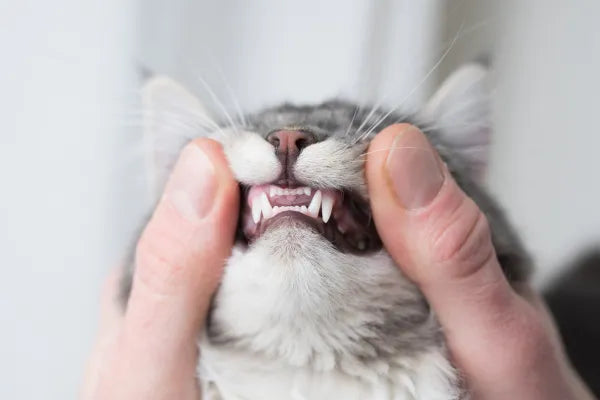
Ask a cat owner to name a dental problem and you'll usually get "tartar" or "bad breath". Ask a vet what they actually find once a cat is under anaesthetic, and you'll get these two.
Both are common. Both hurt. Neither behaves like anything you'd recognise from human dentistry, and neither can be properly diagnosed by looking in your cat's mouth at home. Here's what they are in plain English, so the conversation at the vet makes sense.
Tooth resorption: the tooth dissolves itself
This is the one that surprises people. Cells called odontoclasts start breaking down the structure of the tooth from the inside, and the body gradually replaces it with bone-like tissue. The tooth isn't decaying from bacteria the way a human cavity does. It's being dismantled.
It's remarkably common. Depending on which population was studied and how carefully they looked, research has put tooth resorption in anywhere from around a quarter to more than half of adult cats, and it becomes more likely with age. The lower premolars are the usual starting point.
Nobody knows what causes it. That's not a gap in this article, it's a gap in veterinary science.
What you'd actually notice
Often nothing at all, which is the problem. When signs do show up, they're subtle:
- Chattering or a jaw tremor when the sore spot gets touched, sometimes during grooming or eating
- Dropping food, or chewing on one side only
- Swallowing biscuits whole instead of crunching them
- Suddenly preferring wet food
- A small red patch of gum tissue that looks like it's creeping up over the tooth at the gumline
- Drooling, or a paw to the mouth
That red patch is the one visible clue, and even then it only shows the lesions that have reached the surface. Plenty sit below the gum where you'll never see them.
Why brushing won't prevent it
Brushing your cat's teeth is worth doing. It just won't stop this. There's no known prevention, no diet that helps and no product on our shelves that will change the odds. Anyone telling you otherwise is selling something.
Treatment is extraction of the affected tooth. Which teeth, and whether the whole root needs to come out or just the crown, depends entirely on what the dental x-rays show.
Gingivostomatitis: the immune system attacking the mouth
Feline chronic gingivostomatitis is severe, painful inflammation that spreads well past the gum line into the soft tissue at the back of the mouth. The tissue goes bright red, raw and lumpy, particularly where the upper and lower jaws meet.
The current thinking is that it's an overblown immune response to normal plaque bacteria rather than an infection in itself, with links to feline calicivirus and to FIV and FeLV in some cats. It is not caused by anything you did.
What you'd actually notice
This one is louder than tooth resorption:
- Breath that's genuinely offensive, not just a bit fishy
- Drooling, sometimes with blood in it
- Approaching the food bowl, then backing away, or crying while eating
- Weight loss
- A scruffy, unkempt coat, because grooming has become painful
- Hiding, irritability, or a cat who's stopped being social
A cat who wants to eat but can't is a cat in real pain. That warrants a vet appointment, not a wait-and-see.
The treatment sounds drastic and it works
The most effective treatment is removing all the teeth behind the canines, and often every tooth in the mouth. It's confronting to hear, and most owners' first reaction is to ask about anything else.
Most cats improve substantially afterwards, and a good proportion need no ongoing medication at all. A minority still need long-term medical management, which your vet will talk you through. Medications can settle the inflammation in the meantime but rarely fix it on their own.
The reassuring part: cats cope remarkably well without teeth. They gum dry food, they gain weight, and owners routinely describe a cat who's become friendlier and more active once the pain is gone.
The two side by side
| Tooth resorption | Gingivostomatitis | |
|---|---|---|
| What it is | The tooth structure breaks down and is replaced by bone-like tissue | Severe immune-driven inflammation of the mouth tissue |
| How common | Very common, more so with age | Less common, but severe when it happens |
| Early signs | Often none, then chattering, dropping food, one-sided chewing | Foul breath, drooling, pain at the food bowl, weight loss |
| Visible at home? | Sometimes a red patch at the gumline | Yes, obvious red raw tissue at the back of the mouth |
| Preventable? | No known prevention | Plaque control may help, but no guarantee |
| Treatment | Extraction of affected teeth, guided by x-rays | Extraction of most or all teeth, sometimes plus medication |
Both need a general anaesthetic, and this is why
Tooth resorption is invisible without dental x-rays, because most of what matters is happening below the gum line. Gingivostomatitis needs a full oral exam on a cat who is not in pain and not fighting you.
This is where anaesthesia-free dental cleaning falls down. Scraping visible tartar off an awake cat produces a tooth that looks cleaner in a photo and tells you nothing about the root underneath. It cannot take radiographs, it cannot examine the back of the mouth properly, it cannot extract anything, and it cannot address either condition on this page. For a cat with an undiagnosed resorptive lesion, it also means someone is putting instruments on a tooth that is actively painful.
If cost is the reason it looks appealing, say so to your vet directly. Most clinics will discuss staging the work.
What it costs and what insurance actually covers
Prices for a cat dental with radiographs vary a lot between Sydney clinics, so ring two or three around your local area and ask what the quote includes: pre-anaesthetic bloods, full-mouth x-rays, and whether extractions are quoted separately or by the tooth. A quote without x-rays isn't comparable to one with them.
On insurance, read the PDS before you assume you're covered. Many Australian pet policies exclude dental illness entirely. Those that include it often make it an optional add-on, apply a separate waiting period, cap the annual benefit, and require evidence of a routine dental check within the previous twelve months. Anything already present before the policy started will be treated as pre-existing.
What to do this week
Lift your cat's lip and look at the gum line, then look at the very back corners where the jaws meet. Redness, a raw-looking margin, or tissue growing over a tooth all justify a call. So does a cat who has quietly gone off crunchy food.
August is Dental Month at Kellyville Pets. We can't diagnose either of these conditions, and we won't pretend a product will fix them, but our cat team can show you what a healthy mouth should look like and help you sort out plaque control for the teeth your cat still has.


