


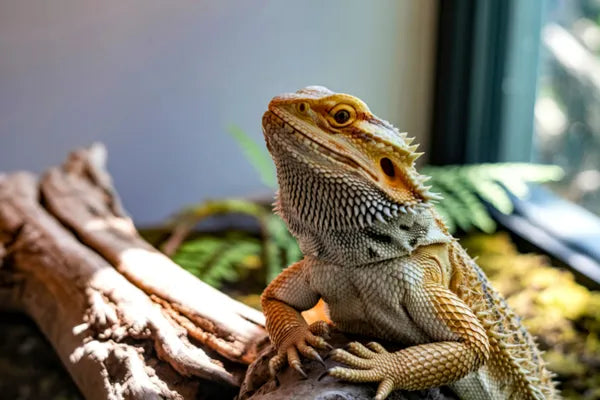
A bearded dragon that's normally out basking, following you around the enclosure, or hassling you for crickets can go quiet almost overnight - and it's one of the more common reasons owners bring questions into the store. The good news is that sluggishness has a handful of usual suspects, and most of them are fixable once you know what to look for. Here's how to work out what's going on with your beardie and what to do about it.
Importance of Proper Lighting and Temperature
Temperature drives almost everything in a bearded dragon's body, including digestion, appetite and energy levels, so this is always the first thing worth checking against the numbers in our Central Bearded Dragon Care Guide:
- Basking zone: 40-45°C directly beneath the heat source
- Warm ambient area: 30-35°C
- Cool end: 22-28°C
- Night-time: 18-22°C
All heat sources should be thermostat-controlled, so a faulty thermostat is worth ruling out early if the basking spot feels off.
UVB matters just as much as heat. Dragons need a high-output T5 HO 10-12% UVB tube spanning at least two-thirds of the enclosure and overlapping the basking area, run on a 12-14 hour cycle in summer and 10-12 hours in winter. UVB output drops well before a tube stops lighting up, so replace it on schedule per the manufacturer's guidelines rather than waiting for it to visibly fail - it's a common, easy-to-miss reason for a dragon slowing down.
Understanding Brumation
Brumation is a natural, hibernation-like drop in activity that's normal in some bearded dragons during the cooler months. Dragons in brumation eat less, move less and sleep more, sometimes for weeks at a time, and individual dragons vary in how deeply they go into it.
The distinction worth watching for: darkening of the beard or body combined with weight loss, soft or weak limbs, or persistent lethargy outside of the winter months can point to illness rather than brumation. If your dragon is simply quiet through the cooler months but otherwise has normal colour, body condition and limb strength when checked, that's consistent with a typical brumation pattern. If any of those extra signs show up, or the sluggishness continues once the weather warms, it's time to get them checked.
Preventing Dehydration
Fresh water should be available at all times, and lightly misting vegetables before feeding is an easy way to build in extra hydration alongside their food. If your dragon is shedding, light misting of the enclosure can also help.
If you suspect your dragon isn't getting enough water on top of that - especially through a hot, dry Sydney summer - dripping water near their nose can encourage a reluctant dragon to lap at moving droplets even if they ignore a still bowl.
A Note on Appetite
Feeding frequency naturally changes with age, so reduced interest in food isn't automatically a lethargy red flag:
| Life stage | Feeding frequency | Diet ratio |
|---|---|---|
| Juvenile | Live insects twice daily, plants available all day | ~70% insects / 30% plant |
| Sub-adult | Insects once daily, plants available | ~50% insects / 50% plant |
| Adult | Insects 3-5 times per week, fresh plants daily | ~30% insects / 70% plant |
An adult dragon skipping insects for a day or two is often just on its normal schedule. A juvenile going off food entirely is more unusual and worth watching closely.
Handling Mood Swings
Not every quiet day means something's wrong. Bearded dragons have off days and periods where they're simply less interested in coming out to interact, and that's normal reptile behaviour on its own.
What matters is the pattern. A dragon having a lazy afternoon and then back to normal the next day is nothing to worry about. A dragon that's been flat for a week or more, especially alongside a change in appetite, weight, stool or basking behaviour, is telling you something more is going on.
When to See a Vet
| Sign | Likely explainable | See a vet |
|---|---|---|
| Slower for a few days, still basking, drinking and normal colour | Yes | - |
| Quiet through the cooler months, normal colour and limb strength when checked | Possibly brumation | Monitor, recheck if it continues into warmer weather |
| Darkening of beard/body plus weight loss or soft, weak limbs | No | Yes |
| Sunken eyes, wrinkled skin, thick or absent stool | Possible dehydration | Yes, if not improving within a few days |
| Persistent lethargy outside winter, or lasting more than a couple of weeks | No | Yes, promptly |
If you're ever unsure which row your dragon falls into, don't guess - bring photos or a video of your dragon's behaviour into the store or to your reptile vet. It's always better to have a normal brumation confirmed than to miss an early illness.
Sluggishness in a bearded dragon almost always comes down to temperature and lighting, seasonal brumation, hydration, normal feeding patterns, or a passing mood - and most of the time, a bit of troubleshooting at home sorts it out. But when something feels off and doesn't resolve in a few days, trust your instincts and get your dragon checked by a vet who works with reptiles.


