Care Guide6 min read

Morelia Python

Morelia species
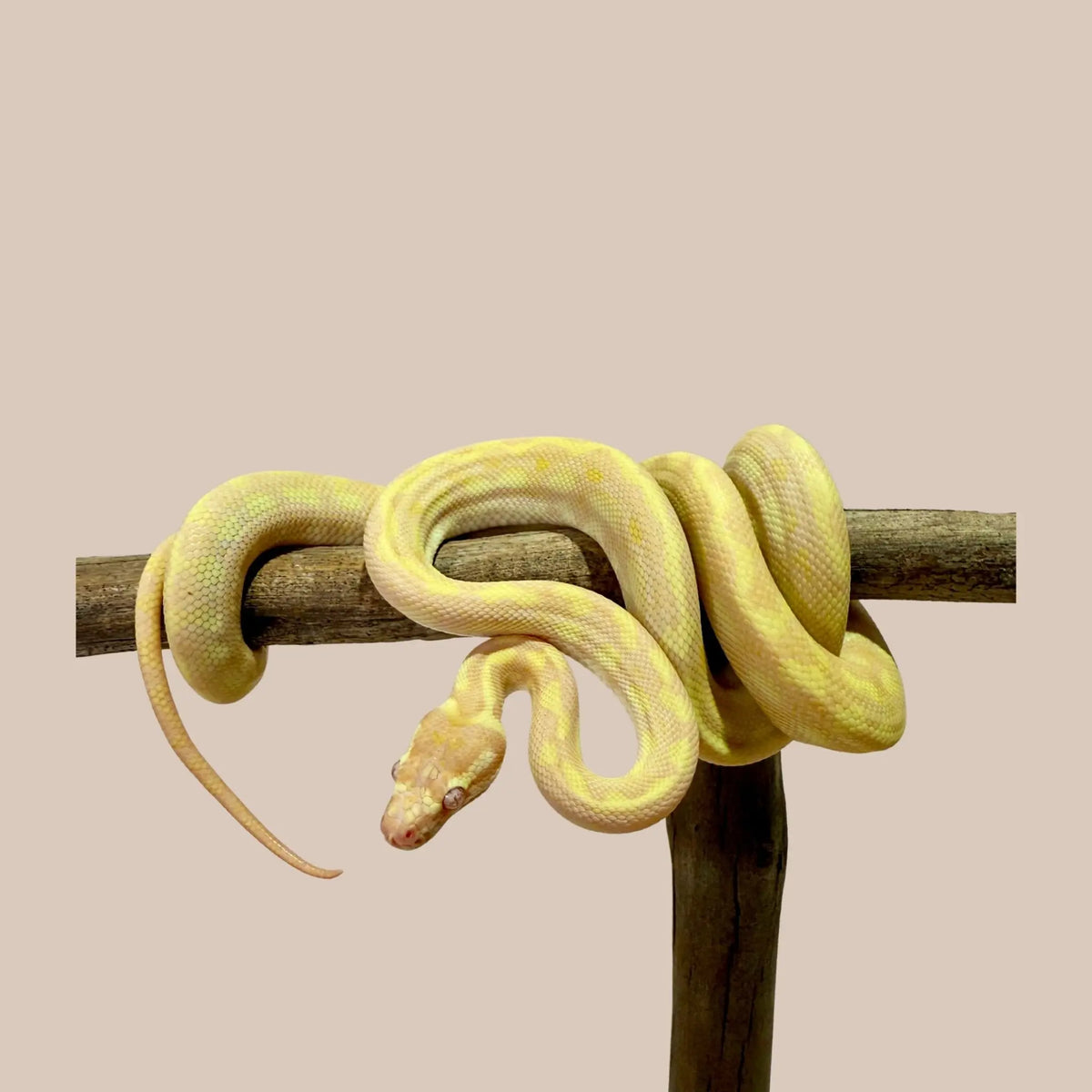
Diamond Python (Morelia spilota spilota)
Darwin Carpet Python (M. s. variegata): Top End Carpet Python · Northwestern Carpet Python
Jungle Carpet Python (M. s. cheynei)
Coastal Carpet Python (M. s. mcdowelli): Eastern Carpet Python · McDowell's Carpet Python
Murray-Darling Carpet Python (M. s. metcalfei): Inland Carpet Python
Bredli Python (M. bredli): Centralian Python · Centralian Carpet Python · Bredl's Python · MacDonnell Ranges Carpet Python
Southwestern Carpet Python (M. imbricata): Inland Carpet Python (WA)

Carpet and Bredli Python Care Guide
Lifespan
20-30+ years
Adult Size
1.5-3m, depending on species
Care Level
Medium
Diet

Carnivorous diet of appropriately sized frozen-thawed rodents

Enclosure

Large, secure, semi-arboreal enclosure with thermal gradient, climbing branches, hides and large water dish

Temperament

Bredli, Coastal and Darwin Carpet Pythons are generally the most even-tempered. Jungle Carpet Pythons are frequently defensive as juveniles

Where they come from

Natural History & Origin

The Morelia spilota complex is one of Australia's most widespread and ecologically diverse snake groups, found across almost the entire continent in habitats ranging from tropical rainforest and savanna to temperate woodland, arid scrubland and suburban gardens. Each subspecies occupies a distinct region: M. s. mcdowelli along the east coast from Cape York to northern NSW; M. s. cheynei in the wet tropical rainforests of far north Queensland; M. s. variegata across the tropical north; M. s. metcalfei through the inland river systems of NSW, Victoria and South Australia; and M. s. spilota restricted to coastal and highland NSW and Victoria. All are semi-arboreal, non-venomous constrictors.

Morelia bredli is endemic to the gorge country and rocky ranges of central Australia, centred on the MacDonnell Ranges, the Finke River system and surrounding arid terrain of the southern Northern Territory — some of Australia's most ancient landscape, with quartzite ranges over 800 million years old. It shows a strong affinity for rocky outcrops, gorge walls and watercourses. A key husbandry distinction from tropical carpet pythons is its requirement for a genuine winter cooling period, reflecting the extreme seasonal temperature contrast of central Australia where summer days may exceed 45°C and winter nights can approach freezing.

All species in this guide require a fauna keeper licence in all Australian states and territories. The Diamond Python (M. s. spilota) is listed as vulnerable in NSW and may attract additional regulatory requirements in that state. Confirm requirements with your state wildlife authority and source only from licensed captive breeders.

Get it right early

Tips for First-Time Owners

  1. 1 Research your chosen subspecies carefully before purchasing — Jungle Carpet Pythons are often the most visually striking but can be the most challenging temperamentally; Coastal and Darwin Carpet Pythons are generally calmer starting points.
  2. 2 Invest in a quality thermostat — temperature instability is the most common cause of respiratory infection and general ill health in captive pythons.
  3. 3 Plan ahead for adult size from the outset — a large female Coastal Carpet Python can reach 2.5 m and will eventually require a substantial, purpose-built enclosure.
  4. 4 Handle regularly from a young age — a Jungle Carpet Python that goes unhandled for weeks will often revert to defensive behaviour and require patient re-socialisation.
  5. 5 Obtain a valid fauna keeper licence before purchasing and source your animal only from a licensed, reputable captive breeder.
Setting up the habitat

Enclosure & Husbandry

Morelia species require enclosures that accommodate both their adult size and their semi-arboreal nature. A minimum enclosure for a snake up to 2 m is 90 cm L × 60 cm W × 120 cm H; larger individuals may require 120 cm L or more. Taller enclosures with multiple levels of sturdy climbing branches are appreciated, as carpet pythons will actively use vertical space. Enclosures must be completely escape-proof — carpet pythons are strong, persistent and capable of exploiting any weakness in locks or joins.

A thermal gradient is essential: the basking zone should reach 30–33°C using a heat lamp, ceramic heat emitter or radiant heat panel regulated by a quality thermostat. The cool end should be maintained at 22–26 °C. Ambient temperature must not fall below 18 °C at night. UVB lighting is strongly recommended to support overall health, calcium metabolism and natural behaviour, with a UVB lamp operating on a 12-hour cycle. Suitable substrates include newspaper and paper towel for ease of cleaning, or cypress mulch and coconut fibre for more naturalistic setups.

Furnish the enclosure with multiple sturdy climbing branches, vines and elevated perches — a strong branch or log should be positioned directly beneath the heat source to serve as a basking site. one to two large, snug hides at both the warm and cool ends, and a large, heavy water bowl. Suitable substrates include reptile-safe aspen bedding, coconut fibre, newspaper-based substrates or cypress mulch, all of which are easy to clean and maintain a dry environment. Fresh water must be available at all times, and the enclosure should be spot-cleaned daily with full cleans carried out routinely.

Hatchlings and juveniles should not be started in a full adult-sized enclosure — too much open space is stressful for young snakes and a common cause of feeding refusal. Start hatchlings in a small, secure tub or enclosure no longer than the snake's body length, with the same thermal gradient applied at a smaller scale. Provide an abundance of snug hides and cover so the snake can feel completely concealed at all times; this is more important than any other furnishing at this stage. Enclosure size can be increased gradually as the snake grows and feeds consistently, with adult-sized housing typically appropriate from around 18 months to two years of age.

What to feed

Dietary Management

Carpet Pythons are enthusiastic feeders in captivity and do very well on a diet of frozen-thawed rodents. Live prey should never be offered, as it poses significant risk of injury to the snake and is not recommended practice. Prey size should approximate the widest diameter of the snake's body. Juveniles should be offered an appropriately sized mouse or small rat every seven to ten days. Sub-adults can transition to weekly or fortnightly feeds as they grow; adults should be fed every fourteen to twenty-one days. Overfeeding is a common mistake with carpet pythons and can lead to obesity and associated health complications.

Always offer prey using feeding tongs, fully thawed and warmed to body temperature. Feeding in a separate container is recommended to reduce enclosure-associated feeding responses. Handling must be avoided for at least 48–72 hours after feeding to prevent regurgitation. Large adults may transition to small rats as their primary prey item. Fresh water in a large, stable bowl must be available at all times; many carpet pythons enjoy soaking.

Day-to-day interaction

Handling & Socialisation

Allow any new python at least two weeks to settle before beginning handling. Once established, regular sessions of ten to twenty minutes, two to three times per week, help maintain tameness and build familiarity. Always support the snake's full body weight at multiple points — large females require firm, confident handling. Approach from the side, never from above, as an overhead approach mimics a predator and can trigger a defensive response.

Temperament is highly variable between subspecies and individuals. Bredli, Coastal and Darwin Carpet Pythons are generally the most even-tempered. Jungle Carpet Pythons are frequently defensive as juveniles, though most calm considerably with consistent, confident handling. Feeding responses can be strong regardless of temperament — always use tongs when offering food and wash hands before handling.

Handling must be avoided for 48–72 hours after feeding and minimised during shed cycles. Be aware that even well-handled animals can have unpredictable days, particularly during breeding season. Any sign of defensive posturing — S-curve neck, rapid tongue flicking — should be respected; return the snake to its enclosure and try again on another occasion.

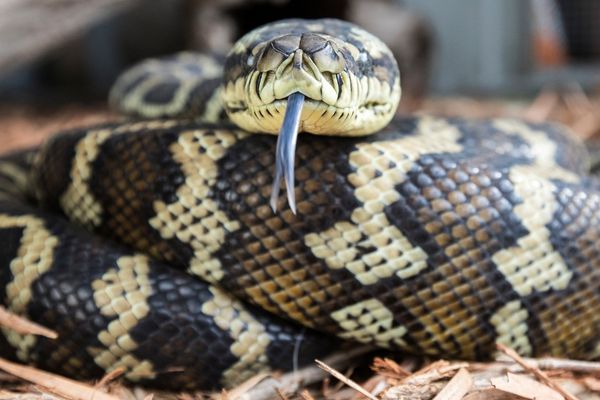
Darwin Carpet Python - Kellyville Pets
AVAILABLE IN-STORE

Darwin Carpet Python

Did you know

Fun Facts

Carpet Pythons are one of Australia's most habitat-versatile snakes — the same species complex occurs in tropical rainforests, alpine woodland and everything in between, with subspecies adapted to each environment.

They are semi-arboreal and have been observed resting in tree canopies over ten metres off the ground in the wild — in captivity, they will readily use elevated branches and perches if provided.

Female Carpet Pythons demonstrate thermogenic brooding — after laying a clutch of eggs, the female coils tightly around them and generates body heat through rhythmic muscular contractions, maintaining incubation temperature for the full two-month period.

Keep them stimulated

Enrichment

Carpet Pythons are among the more inquisitive and active of Australia's commonly kept pythons and benefit greatly from a stimulating enclosure. Multiple climbing levels using sturdy timber branches or PVC perches at different heights encourage natural arboreal behaviour and support muscle tone. Providing hides at both ground level and elevated positions allows the snake to choose where it feels most secure.

Occasionally rearranging enclosure furnishings during cleans encourages exploration and engagement with the environment. Supervised out-of-enclosure time in a secure, escape-proof space — such as a reptile-proofed room — provides additional physical and sensory enrichment. For animals that tolerate it well, brief outdoor access in a secure enclosure during warm weather allows natural UVB exposure and environmental complexity. Scent enrichment — introducing a novel safe object briefly into the enclosure — can also stimulate investigation.

What to watch for

Common Health Issues

Common health issues in pythons are most often linked to husbandry. Respiratory infections may develop if enclosure temperatures are too low or ventilation is inadequate — maintaining the correct temperature range specific to the subspecies is essential for prevention. Shedding difficulties can occur when humidity is too low or fluctuates excessively; providing a slightly humid hide during shed cycles can help.

Ectoparasites (snake mites) can be challenging to eradicate once established; inspect regularly and treat with a veterinarian-recommended product, thoroughly disinfecting the enclosure and all furnishings simultaneously. Internal parasites (worms) may impact body condition; routine faecal checks are recommended.

Obesity can occur if prey size or feeding frequency is excessive. Regurgitation may result from handling too soon after feeding, incorrect temperatures or stress. Burns can occur if heat sources are not properly thermostat-controlled or exposed to direct contact. Any signs of wheezing, retained shed, unexplained weight loss, regurgitation or changes in behaviour should be assessed by a reptile-experienced veterinarian promptly.

Everything you need

Essentials Shopping List

Setup checklist

  • Timber or secure glass enclosure — minimum 90 × 60 × 120 cm for adults up to 2 m; larger for bigger subspecies
  • Escape-proof locking mechanism
  • Radiant heat panel, ceramic heat emitter or heat lamp
  • Quality thermostat (essential)
  • Digital dual-probe thermometer (basking and cool end)
  • Two large, snug hides (warm and cool end)
  • Sturdy climbing branches (multiple, at varying heights)
  • Vines or artificial climbing décor
  • Large, heavy water bowl
  • Damp moss / humid hide (for shed support)
  • Coconut fibre, aspen or cypress mulch substrate
  • Reptile-safe disinfectant
  • Long feeding tongs (minimum 40 cm)
  • Frozen rodent supply (mice and/or rats, size-appropriate)
  • T5 6–10% UVB tube and fitting
  • Lighting timer
  • Fauna keeper licence (state-specific)
  • Feeding and husbandry record book
FAQ

Commonly Asked Questions

  • Are Carpet Pythons venomous?

    No. Pythons are non-venomous constrictors. Like all snakes, they may bite defensively if mishandled or startled, but bites from non-venomous snakes carry no venom risk. Bites should be cleaned thoroughly.

  • How large will my Carpet Python grow?

    This depends on the subspecies and sex. Females are larger than males across all subspecies. Coastal Carpet Python females can reach 2–2.5 m; Jungle Carpet Pythons are typically 1.5–2 m; Darwin Carpet Pythons are similar. Plan enclosure size based on the expected adult length of your specific subspecies.

  • Is the Bredli Python a type of Carpet Python?

    It is closely related and often grouped with carpet pythons in the trade, but M. bredli is a distinct full species — the sister taxon to all M. spilota subspecies combined — rather than a subspecies of M. spilota. SImilarly, M. imbricata is a distinct species.

  • Do Carpet Pythons need UVB lighting?

    Not historically considered essential, but current evidence increasingly supports low-level UVB supplementation (T5 6–10%) for long-term health, improved activity and natural vitamin D₃ synthesis. Kellyville Pets recommends UVB for all reptile species.

  • Is a licence required to keep a Carpet Python in Australia?

    Yes. A fauna keeper licence is required in all states and territories. Note that the Diamond Python (M. s. spilota) is listed as vulnerable in NSW and may attract additional requirements — contact the NSW wildlife authority for current guidance.

Need help?

Our specialists are in-store every day to help with setup, licensing and feeding.

Visit Kellyville Pets →