Care Guide6 min read

Scorpions

Various species
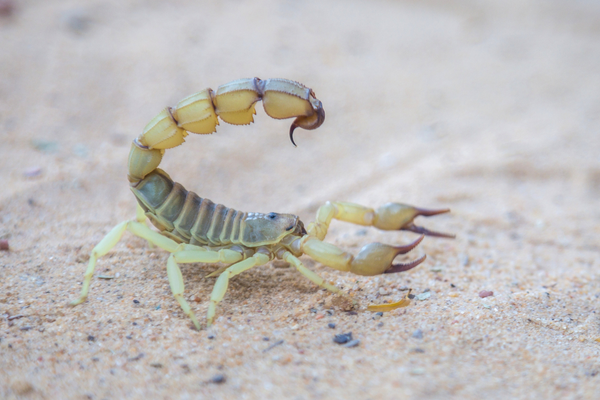
Flinders Ranges Scorpion (Urodacus elongatus)
Desert Scorpion (Urodacus yaschenkoi): Inland Robust Scorpion
Rainforest Scorpion (Hormurus waigiensis): previously Liocheles waigiensis

Scorpion Care Guide
Lifespan
5-15 years
Adult Size
3-10cm
Care Level
Low to Medium
Diet

Live invertebrate prey — primarily crickets, woodies (cockroaches) and mealworms, sized appropriately for the scorpion

Enclosure

Secure, escape-proof glass or acrylic enclosure (minimum 30 × 20 × 20 cm for Hormurus; 40 × 30 × 30 cm for Urodacus) with appropriate substrate, hide, and a shallow water source

Temperament

Defensive rather than aggressive; sting only when threatened. Hormurus species calmest; desert Urodacus most defensive

Where they come from

Natural History & Origin

Australia is home to over 100 described scorpion species, found in habitats ranging from tropical rainforest to central desert. The most commonly kept species span this ecological diversity. Urodacus elongatus (Flinders Ranges Scorpion) is native to the rocky ranges and semi-arid scrublands of South Australia and western New South Wales, where it shelters beneath rocks and in deep rock crevices. Urodacus yaschenkoi (Desert Scorpion) is found across the arid interior of Australia — including the Simpson Desert and surrounding regions — where it constructs deep, spiralling burrows in hard-packed soil that can extend over a metre underground. Urodacus elongatus: 6–9 cm total length. Urodacus yaschenkoi: 7–10 cm.

Hormurus waigiensis (Rainforest Scorpion) is distributed across the tropical and subtropical forests of northeastern Queensland and into New Guinea, where it is found under bark, in decaying logs and within moist leaf litter — making it one of the most arboreal of the commonly kept Australian scorpion species. Hormurus waigiensis: 3–5 cm — notably smaller than Urodacus species. Urodacus species are also among the longer-lived; Liocheles species tend toward the shorter end of the range.

All Australian scorpions are venomous, but none of the commonly kept species are considered medically significant to healthy adults. Their venom is primarily adapted for subduing invertebrate prey rather than as a defence against large vertebrates. The most commonly quoted medical concern in Australian scorpion keeping is allergic reaction rather than venom toxicity — individuals with known sensitivities to bee or wasp stings should exercise particular caution.

Get it right early

Tips for First-Time Owners

  1. 1 Match the enclosure setup precisely to the natural habitat of your species — a Desert Scorpion in a humid setup and a Rainforest Scorpion in a dry one will both fail to thrive, regardless of how good the rest of the care is.
  2. 2 Remove all live prey from the enclosure within 24 hours — this is non-negotiable, particularly in the lead-up to and during a moult, when the scorpion is most vulnerable to injury.
  3. 3 Never disturb a moulting scorpion — if your scorpion is lying on its back or side and not responding to gentle stimulation, assume it is moulting and leave it entirely undisturbed until the process is complete and the new exoskeleton has hardened.
  4. 4 Treat every scorpion as venomous and handle accordingly — the sting of commonly kept Australian species is not medically dangerous to healthy adults, but it is painful and allergic reactions are possible.
  5. 5 Check your state's current requirements before purchasing — while most Australian scorpion species do not require a keeper licence, regulations vary between states and for certain species.
Setting up the habitat

Enclosure & Husbandry

Enclosure requirements vary by species and should reflect each animal's natural habitat. For Urodacus yaschenkoi (Desert Scorpion), the priority is a deep sandy substrate — a minimum of 20–25 cm of clean play sand or a sand and fine soil mix — to allow the animal to excavate its natural spiral burrow. The enclosure surface should remain dry, with very slight moisture only in the deepest substrate layer. Maintain temperatures of 28–35°C at the warm end, with a gradient to 22–26°C at the cool end, using a low-wattage heat mat on the side wall regulated by a thermostat.

For Urodacus elongatus (Flinders Ranges Scorpion), a rocky, semi-arid setup works best — a substrate of sand and crushed sandstone or fine gravel of 8–10 cm depth, with flat rocks and cork bark stacked to create crevices and shelters that replicate rocky outcrop conditions. Temperatures of 26–32°C with a gradient to 20–24°C suit this species well.

For Hormurus waigiensis (Rainforest Scorpion), a humid forest setup is required — coconut fibre or a bark and coco mix substrate of 5–8 cm, kept slightly moist but not wet. Humidity should be maintained at 60–75%. Temperatures of 24–28°C are appropriate. Cork bark pieces, hollow sections of bamboo and artificial plants provide the arboreal and surface shelter this species prefers.

All species require a secure, fully escape-proof enclosure — scorpions are remarkably capable of squeezing through small gaps. Ventilation must be adequate to prevent stagnant conditions. All species are nocturnal and do not require UVB or specialised lighting. A simple 12-hour ambient light cycle is sufficient. Note: some states may require a licence to keep certain scorpion species — confirm current requirements with your state wildlife authority before purchasing.

What to feed

Dietary Management

All commonly kept Australian scorpions are carnivores and require live invertebrate prey. Crickets and wood cockroaches (woodies) are the most practical staple prey items. Mealworms, black soldier fly larvae and other invertebrates can be offered for dietary variety. Prey size should always be smaller than the scorpion's body length — oversized prey items can stress or injure the scorpion during subduing.

Adult Urodacus species should be fed one to two appropriately sized insects every one to two weeks; adults are not heavy feeders and overfeeding can cause health issues. Liocheles waigiensis, being smaller, should receive proportionally smaller prey — small crickets or mealworms every seven to ten days. Juveniles of all species should be fed more frequently — every five to seven days — to support growth. All prey items should be gut-loaded for 24 hours before offering. Dust prey lightly with a calcium supplement every two to three feedings.

Always use long feeding tongs when introducing prey — never place hands into the enclosure while a scorpion is exposed. Remove any uneaten prey within 24 hours, as live prey left overnight can stress or injure a recently moulted scorpion. Fresh dechlorinated water must be available in a very shallow dish or bottle cap at all times.

Day-to-day interaction

Handling & Socialisation

Scorpions should be handled as infrequently as possible and only when necessary — for health checks, enclosure maintenance or transfer. They are not companion animals in the conventional sense and do not benefit from handling. When handling is unavoidable, use long, blunt-tipped soft forceps or a soft paintbrush to gently guide the scorpion into a secure container rather than picking it up directly.

If direct handling is necessary for an experienced keeper, approach calmly from the front and scoop from underneath — never grab from above or restrain the tail. Always handle close to a surface and never over open height. Gloves do not provide adequate protection against a sting and create a false sense of security — calm, deliberate technique is more effective than protective equipment. Keep a first aid plan in mind: scorpion stings from commonly kept Australian species are painful but not medically dangerous to healthy adults — however, anyone experiencing unusual symptoms, severe pain or signs of allergic reaction should seek medical attention promptly.

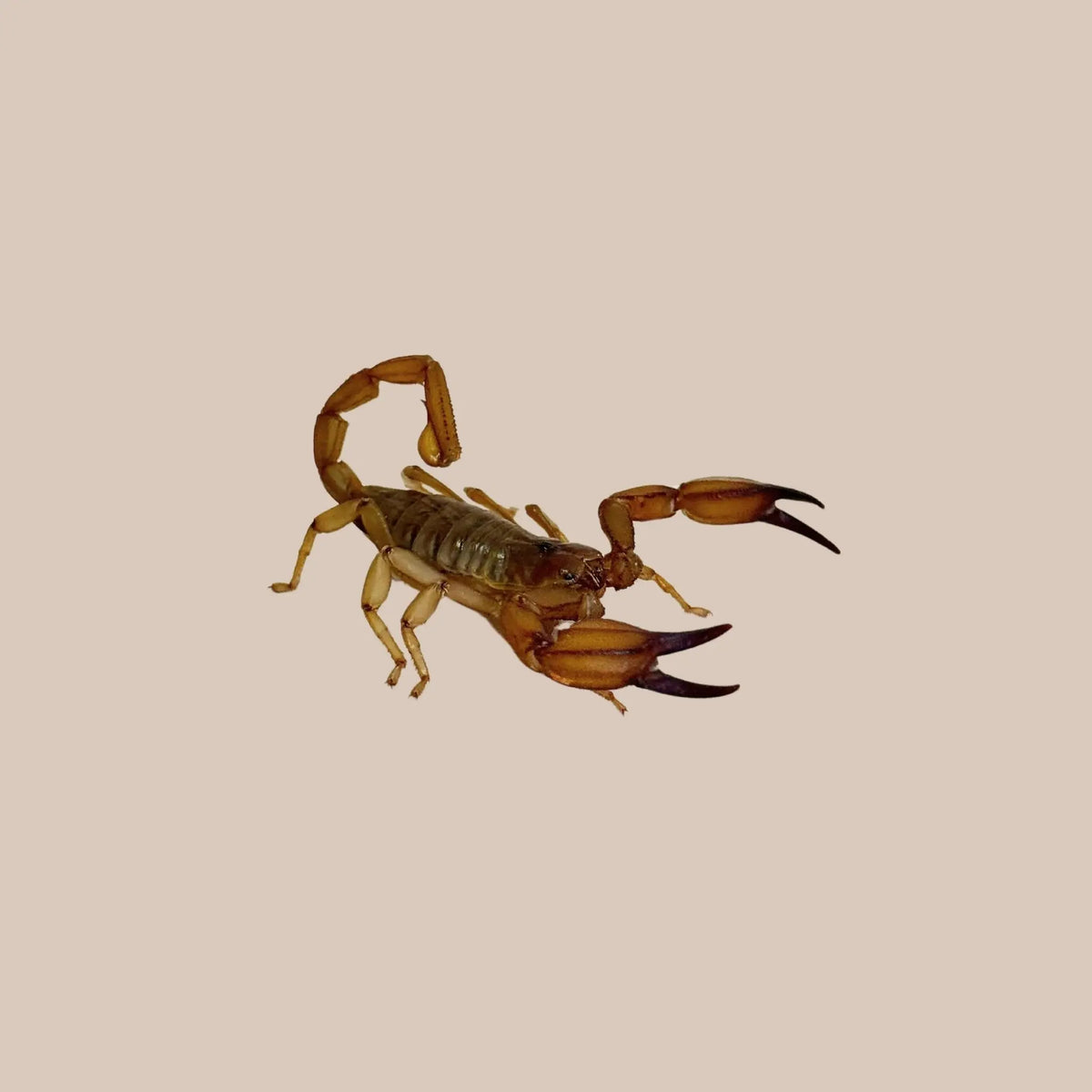
Flingers Ranges Scorpion - Kellyville Pets
AVAILABLE IN-STORE

Flingers Ranges Scorpion

Did you know

Fun Facts

Scorpions fluoresce under UV (blacklight) — they glow a vivid blue-green due to fluorescent compounds in their cuticle. The biological purpose of this fluorescence is not fully understood, but it may play a role in detecting low-level moonlight or UV in their environment.

All scorpion species give birth to live young — nymphs emerge from the mother and are carried on her back for their first moult, after which they become independent. Australian species typically produce litters of 10–30 young.

Scorpions are among the oldest known terrestrial animals on Earth, with a fossil record extending back over 430 million years. The earliest scorpion fossils are from marine environments, suggesting the group transitioned from sea to land early in evolutionary history.

Keep them stimulated

Enrichment

The most meaningful enrichment for scorpions is a naturalistic enclosure that fully accommodates their species-specific behaviours. For Urodacus yaschenkoi, a deep sandy substrate that allows the animal to excavate its natural spiral burrow is the single most important enrichment provision — a Desert Scorpion that cannot burrow will be chronically stressed. For Urodacus elongatus, a well-constructed rocky crevice environment with multiple shelter choices provides security and environmental complexity. For Hormurus waigiensis, layered cork bark, bamboo sections and dense groundcover material allow the species' naturally exploratory, arboreal behaviour.

Feeding with live prey in the evening — when scorpions are naturally active — stimulates hunting behaviour and provides physical and sensory engagement. Introducing occasional novel prey species (e.g. alternating crickets with woodies) adds variety. Maintaining a natural temperature drop at night that mirrors the animal's native climate supports normal circadian rhythms and is itself a form of environmental enrichment.

What to watch for

Common Health Issues

Dehydration is one of the most common problems in captive scorpions and often goes unnoticed until the animal is in poor condition — signs include a shrunken, wrinkled abdomen and reduced activity. Ensure a shallow water source is always available and that substrate moisture levels are appropriate for the species. Failed moults (dysecdysis) can occur when humidity is too low or a scorpion is disturbed mid-moult — ensure correct humidity for the species and remove all prey during the moulting period. Injury from live prey is a preventable but common cause of harm — always remove uneaten prey within 24 hours, and particularly before any moult.

Substrate mite infestations can develop in humid setups if maintenance is inadequate — maintain appropriate moisture levels, remove waste promptly and replace substrate if mites are observed. Obesity can result from overfeeding — adult scorpions require less food than many keepers assume, and a plump, rounded abdomen indicates good condition while a heavily distended one indicates overfeeding. Any scorpion displaying prolonged lethargy, failure to moult when due, or unexplained weight loss should be assessed by a veterinarian experienced with invertebrates.

Everything you need

Essentials Shopping List

Setup checklist

  • Secure glass or acrylic enclosure — minimum 40 × 30 × 30 cm (Urodacus); 30 × 20 × 20 cm (Hormurus)
  • Tight-fitting, escape-proof lid with ventilation
  • Low-wattage heat mat (side-wall placement)
  • Quality thermostat
  • Digital dual-probe thermometer
  • Deep substrate: clean play sand and fine soil mix (Urodacus yaschenkoi — 20–25 cm); sand and sandstone grit (Urodacus elongatus — 8–10 cm); coconut fibre and bark mix (Hormurus — 5–8 cm)
  • Flat rocks, cork bark or slate (Urodacus elongatus)
  • Cork bark sections or bamboo tubes (Hormurus)
  • Shallow water dish or bottle cap
  • Water dechlorinator
  • Long feeding tongs (20+ cm)
  • Soft paintbrush (for guiding without direct contact)
  • Live cricket supply
  • Live wood cockroach supply
  • Feeder insect gut-load food
  • Calcium supplement powder
  • Reptile-safe or invertebrate-safe disinfectant
  • UV/blacklight torch (for locating and observing)
  • First aid plan (in case of sting)
FAQ

Commonly Asked Questions

  • Are Australian scorpions dangerous?

    The commonly kept Australian species — Urodacus and Hormurus — are not considered medically significant to healthy adults. Their venom causes local pain, swelling and temporary discomfort, but is not capable of causing serious systemic harm in most people. The main exception is individuals with allergies to bee or wasp venom, who may have a cross-reactive response — seek medical attention if unusual symptoms develop after a sting.

  • Do scorpions glow in the dark?

    Not in complete darkness, but they fluoresce brilliantly under a UV (blacklight) torch. This is a reliable and harmless way to locate scorpions in a planted or complex enclosure, or in the wild.

  • Can I keep multiple scorpions together?

    Australian scorpions are generally solitary and territorial. Cohabitation should be avoided unless keeping a known breeding pair of the same species, and even then should be carefully monitored. Cannibalism between adults is possible, particularly around moulting periods.

  • How do I know if my scorpion is about to moult?

    Signs include reduced or absent feeding, spending more time in the hide, a slightly dull or matte cuticle appearance, and sometimes a slightly swollen abdomen. Moults can occur without much prior warning in some individuals — always remove live prey as a precaution when any of these signs are present.

  • Do I need a licence to keep Australian scorpions?

    Most commonly kept Australian species, including Urodacus and Hormurus, do not require a keeper licence in most states. However, requirements vary between states and for specific species — confirm with your state wildlife authority before purchasing.

Need help?

Our specialists are in-store every day to help with setup, licensing and feeding.

Visit Kellyville Pets →