


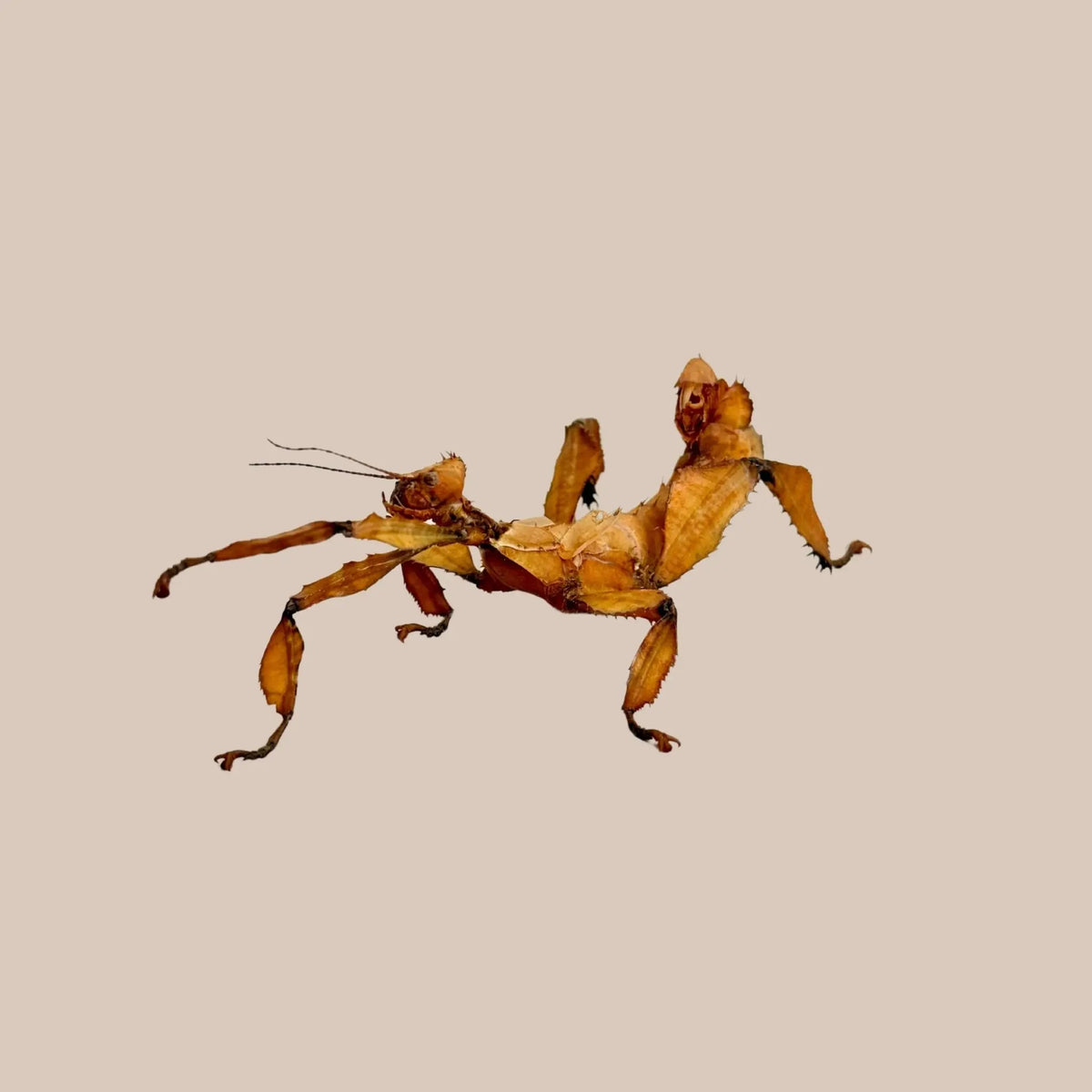
Stick and Leaf Insects
Various species
Download the full care guide (PDF)
Free & Print-ready

6-18 months

10-25cm

Low


Where they come from
Natural History & Origin


Get it right early
Tips for First-Time Owners
- 1 Always ensure the enclosure is tall enough — as a minimum, the clear height above the highest foliage should be at least three times the adult body length of your species. This is the single most common cause of fatal failed moults.
- 2 Never disturb a moulting animal — if your insect is hanging motionless from the ceiling or upper foliage, leave it entirely undisturbed until it is fully free of its old skin and has moved away to a new resting position.
- 3 Seal the water jar opening with cotton wool before placing foliage in the enclosure — nymphs drown easily in even shallow water and this simple step prevents a common and entirely avoidable cause of loss.
- 4 Provide foliage generously and refresh it every two to three days — a phasmid that runs out of fresh leaves will decline rapidly, and dried or wilted leaves are not an adequate substitute.
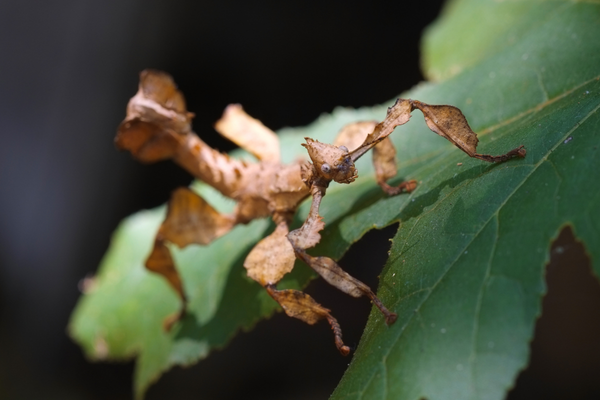
- 5 Spiny leaf insects are strongly recommended for first-time keepers — it is one of the most forgiving, hardy and spectacular Australian phasmid species, and its dietary flexibility makes foliage sourcing much easier than many other species.
Setting up the habitat
Enclosure & Husbandry
What to feed
Dietary Management
Day-to-day interaction
Handling & Socialisation


Did you know
Fun Facts
Female spiny leaf insect nymphs in their first instar closely mimic the local meat ant species — Iridomyrmex species — in colouration, shape and movement, gaining protection from predators that avoid ants. The mimicry is so precise that it varies between geographic populations to match the local ant species.
Many Australian phasmid species are parthenogenetic — females can produce a complete, self-sustaining colony without a single male ever being present. Males exist in some species but are often rare in captive populations.
Phasmid eggs are among the most structurally complex insect eggs in the world, often featuring a hardened capitulum (lid) that resembles the elaiosome of plant seeds — a resemblance so convincing that ants collect and bury them, inadvertently providing incubation conditions the eggs require to hatch.
Keep them stimulated
Enrichment
What to watch for
Common Health Issues
Everything you need
Essentials Shopping List
Setup checklist
- Tall mesh or net enclosure — minimum 30 × 30 × 60 cm height (larger for bigger species)
- Narrow-necked water jars or vases (for foliage stems)
- Cotton wool (to seal water jar openings)
- Fresh eucalyptus, wattle or rose foliage (pesticide-free, species-appropriate)
- Paper towel or coconut fibre substrate (to catch frass and eggs)
- Fine-mist spray bottle (for humidity and foliage misting)
- Small container with barely moist vermiculite (for egg incubation)
- Soft paintbrush (for gentle handling of nymphs)
READY TO SET UP
Browse all
Shop the Essentials

Springtails Clean Up Crew
from$16.49
View →

Isopod Clean Up Crew
from$17.49
View →

Critter's Comfort Fine 20L - Previously Kritter's Crumble
$29.99
View →

Critter's Comfort Coarse 20L - Previously Kritter's Crumble
$29.99
View →

Reptile One Digital Thermometer & Hygrometer*
$18.99
View →

EcoTech Plastic Terrarium
from$10.99
View →

Insectimo Pod Stick Insect Enclosure
$129.95
View →

Reptile One Mini Infrared Thermometer
$49.49
View →
FAQ
Commonly Asked Questions
-
What is the best stick insect species for a beginner?
-
How do I incubate phasmid eggs?
-
My stick insect is hanging completely still — is it dead or moulting?
-
Do Australian phasmids need UVB or special lighting?
-
Do I need a licence to keep Australian stick insects?
Learn more
See more care guides Read about other species
No articles match that search. Try a different word.


Need help?Our specialists are in-store every day to help with set up, licensing and feeding.
Visit Kellyville Pets