


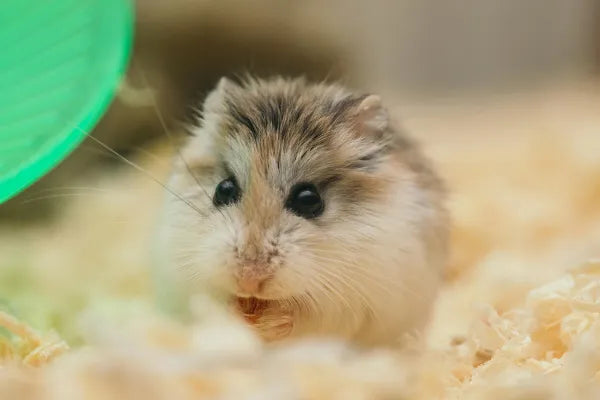
It is one of the most common questions we get on the small animal floor, usually from a kid who has seen one in a book, a game or a YouTube video, and occasionally from a parent who grew up overseas and had one themselves.
The answer is that we cannot sell you a hamster, and neither can anybody else in the country. It is not a stocking decision or a supply problem. Hamsters are prohibited as pets everywhere in Australia.
Here is why, and what to look at instead - because the good news is that the thing most people actually want from a hamster is available, and in a couple of ways it is better.
The short answer
Hamsters cannot be legally imported into Australia, and they cannot be kept as pets in any state or territory. There is no permit for it, no exemption for a single family pet, and no state where the rules are softer. Anything you see advertised as a hamster for sale here is either mislabelled - usually a mouse or a dwarf rat - or illegal.
If you are unsure about any small animal you have seen listed, ask us. We would much rather answer the question than have somebody buy something they will have to surrender.
Why the rules are this strict
Australia has an unusually painful history with small introduced mammals. Rabbits were released here in the 1850s and spread across the continent within fifty years. Foxes followed. House mice, introduced accidentally, still produce plagues across grain-growing regions that cost farmers enormous amounts. The result is a system that assumes an introduced species will eventually escape, and asks what happens then.
For hamsters the answer is not reassuring. Syrian hamsters, the common pet species, come from hot, dry, sparsely vegetated country in Syria and Turkey. They dig extensive burrows, breed quickly and store food. That is close to a description of inland Australia. A hamster that gets loose in a British garden is a sad story for one family. A population that establishes here is a different problem entirely, and it is not one you can undo.
Reasonable people can find the rule frustrating, particularly when a single pet in a cage clearly is not going to invade anything. But the policy is written for the aggregate, not the individual, and given what rabbits did it is hard to argue the caution is misplaced.
What else is on the list
Hamsters are not alone. A few small animals that are perfectly ordinary pets overseas are prohibited here, and the rules also vary between states, which catches people out when they move.
| Animal | Status in NSW |
|---|---|
| Hamster | Prohibited. Not legal anywhere in Australia |
| Gerbil | Prohibited |
| Chipmunk, squirrel, hedgehog | Prohibited |
| Mouse | Legal and widely kept |
| Rat | Legal and widely kept |
| Guinea pig | Legal and widely kept |
| Rabbit | Legal in NSW, but prohibited in Queensland |
That last row is worth remembering if you are moving interstate. Rabbits are ordinary pets here and illegal across the Queensland border, and people do get caught out by it.
What to get instead
Before picking a replacement, it helps to be honest about what a hamster was going to give you. Usually the answer is: small, affordable, does not need a backyard, and manageable for a child.
| Rat | Mouse | Guinea pig | |
|---|---|---|---|
| Space needed | Tall cage, moderate footprint | Small cage | Largest of the three, needs floor space |
| Awake when? | Active in the evening, when the family is home | Mostly night, some evening | Daytime and evening, naps throughout |
| Handling | Excellent. Genuinely enjoys people and learns tricks | Fine, but quick and easily startled | Good, calm, rarely bites |
| Company | Must be kept in pairs or more | Best in same-sex pairs or groups | Must not be kept alone |
| Lifespan | 2 to 3 years | 1 to 2 years | 5 to 7 years |
| Best for | A child who wants a pet that interacts back | A first pet, or a small space and budget | A family wanting a longer commitment |
If what you wanted was a hamster, a pair of rats is almost always the better answer, and I say that as somebody who knows how unpopular the word "rat" is with a certain kind of parent. Pet rats are affectionate, clever, come when called, learn their names, and are awake in the evening when children are actually home. Hamsters are solitary, largely nocturnal, and inclined to bite when woken up - which is exactly what a kid does after school. A good chunk of hamster disappointment overseas is really that mismatch.
Mice are the closest match on size, cost and cage space if that is the constraint. Guinea pigs are a bigger commitment in every direction: more space, more years, more food, but very rewarding with it.
If your child has their heart set on one
Telling a seven year old that the pet they have been researching for months does not exist here is not fun. What works better than "it is illegal" is bringing them in to meet the alternatives. Most children who arrive wanting a hamster leave wanting rats, because rats will sit on a shoulder and take food from a hand and a hamster in a video never did that.
Our small animal team can get them out, do the introductions properly and talk through what each one actually needs. No pressure to buy on the day. Come and meet a few, and go home and think about it.


