


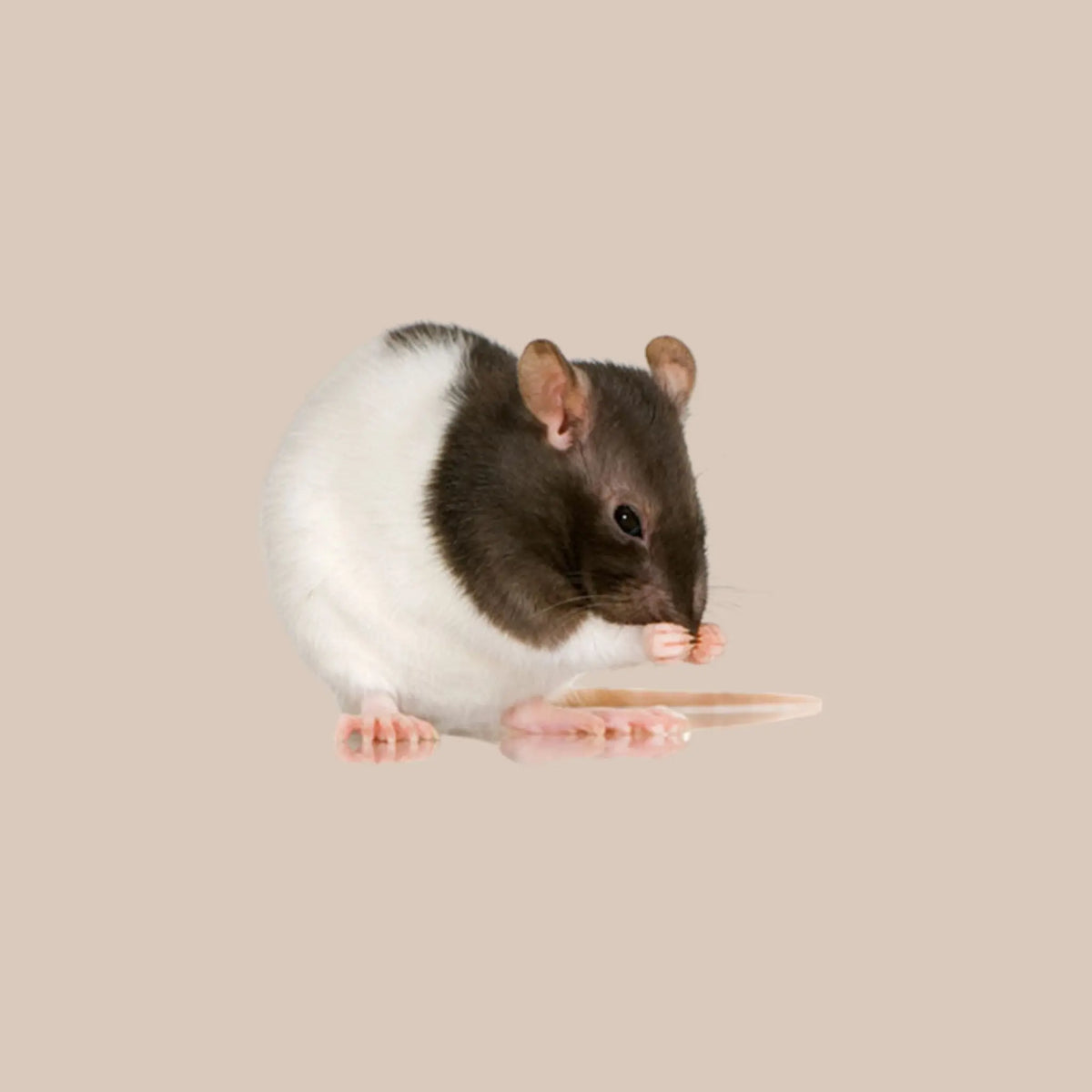
Rat
Rattus norvegicus domestica

Download the full care guide (PDF)
Free & Print-ready

2-3 years

18-26cm (not including tail)

Medium


Where they come from
Natural History & Origin


Get it right early
Tips for First-Time Owners
- 1 Rats must be kept in same-sex pairs or groups — a single rat without adequate daily human companionship will suffer. Two rats are not twice the work of one, and the quality of life benefit for both animals is significant.
- 2 Respiratory health is the primary ongoing health concern in pet rats — ensure good cage ventilation, use paper-based or fleece bedding rather than pine or cedar shavings, and seek veterinary attention at the first sounds of clicking or laboured breathing.
- 3 Daily handling and out-of-cage time are not optional extras — rats require a minimum of one hour per day outside their cage for exercise and social interaction. An under-stimulated rat is an unhappy rat.
- 4 Desexing female rats significantly reduces the risk of mammary tumours, which are very common — discuss desexing with your vet at the first health check.
- 5 Their short lifespan of 2–3 years is one of the most important considerations before acquiring rats. Be prepared for significant veterinary care needs in the second and third year of life.
Setting up the habitat
Enclosure & Husbandry
What to feed
Dietary Management
Day-to-day interaction
Handling & Socialisation
Find your next best friend
Browse all Small Animals
Our Available Small Animals


Did you know
Fun Facts
Rats have been demonstrated to experience empathy in peer-reviewed research — laboratory rats will consistently choose to free a trapped, distressed companion rather than eat available chocolate, even when both options are available simultaneously. This finding surprised researchers and contributed significantly to the scientific understanding of empathy in non-human animals.
Rats communicate extensively using ultrasonic vocalisations in the 20–80 kHz range — entirely inaudible to humans — which are used to express playfulness, excitement, distress and social bonding. When rats play together or with humans, they produce high-frequency 50 kHz 'chirps' that are associated with positive emotional states, sometimes described as rat laughter.
Domestic rats have been used to detect landmines and tuberculosis through their extraordinary sense of smell — a programme called APOPO trains African giant pouched rats (a different species to the domestic rat) to detect both, and the programme has contributed to clearing millions of square metres of landmined territory.
Keep them stimulated
Enrichment
What to watch for
Common Health Issues
Everything you need
Essentials Shopping List
Setup checklist
- Large multi-level wire cage — minimum 60 x 40 x 80cm for a pair; larger strongly recommended
- Bar spacing no larger than 1.5 cm
- Rat hammocks or hanging pouches (minimum two per cage)
- Solid-based litter tray with dust-free paper litter
- Wooden or cardboard hides
- Heavy ceramic food bowl or scatter feeding
- Sipper water bottle (plus bowl as backup)
- Paper-based bedding or kiln-dried aspen shavings
- Quality rat pellets
- Daily fresh vegetables and small fruit portions
- Protein treats (cooked chicken, boiled egg) 2–3 times per week
- Small animal-safe cage disinfectant
- Ropes, tunnels, ladders, willow balls (rotating selection)
- Cardboard tubes and boxes (foraging and enrichment)
- Puzzle feeder toys
- Nail clippers
- Travel carrier
- Annual vet check (more frequently in second and third year)
READY TO SET UP
Browse all
Shop the Essentials

Torwood Farm Mini Oaten Bale
$25.99
View →

Kaytee Clean & Cozy Small Pet Bedding
$24.99
View →

Trio Of Fun Ball Medium*
$11.49
View →

Oxbow Simple Rewards Timothy Treats Apple & Banana
$12.99
View →

HempFlax Hemp Bedding
$32.99
View →

Oxbow Simple Rewards Timothy Treats
$12.99
View →

Back-2-Nature Small Animal Bedding & Litter - 30L
$29.99
View →

Pip Squeak Rustic House Hide
from$31.99
View →
FAQ
Commonly Asked Questions
-
How long do rats live?
-
Can I keep just one rat?
-
My rat is making clicking or wheezing sounds — what should I do?
-
Are domestic rats clean?
-
Can I keep rats with other small pets?
Learn more
See more care guides Read about other species
No articles match that search. Try a different word.


Need help?Our specialists are in-store every day to help with set up, licensing and feeding.
Visit Kellyville Pets