


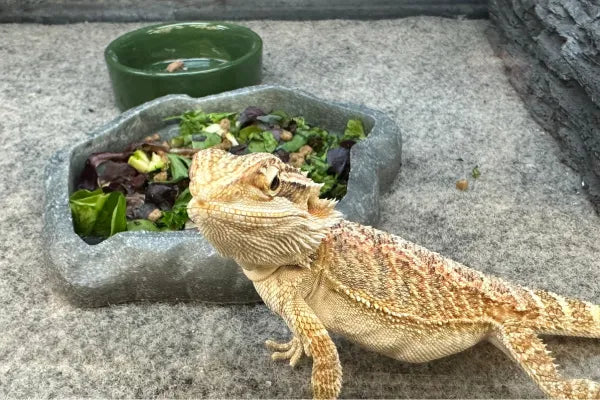
Introduction
A healthy diet is one of the most important parts of caring for a bearded dragon. Feeding the right balance of insects, leafy greens and vegetables helps support healthy growth, strong bones and overall wellbeing.
Whether you've just welcomed home your first beardie or want to make sure you're providing the best possible diet, this guide covers everything you need to know, including feeding schedules, age-specific diets, safe foods, supplements and common feeding mistakes.
What Do Bearded Dragons Eat?
Bearded dragons are omnivores, meaning they eat both animal and plant-based foods. However, the balance changes as they grow.
Young bearded dragons need more protein to support rapid growth, while adults require a diet that's mostly leafy greens and vegetables.
A balanced diet should include:
-
Live feeder insects
-
Leafy greens
-
Vegetables
-
Occasional fruit treats
-
Calcium and vitamin supplements
-
Fresh water
Providing a varied diet helps ensure your dragon receives a wide range of essential nutrients.
Feeding Bearded Dragons by Age
Baby Bearded Dragons (0-6 months)
Young dragons grow quickly and require frequent feeding.
Offer:
-
70-80% live insects
-
20-30% vegetables and leafy greens
Feed insects 2-3 times each day, offering as many appropriately sized insects as they can eat within 10-15 minutes.
Juvenile Bearded Dragons (6-12 months)
As growth begins to slow, gradually increase the amount of plant matter.
Aim for:
-
Around 50% insects
-
Around 50% vegetables
Feed insects once or twice daily and provide fresh salad every day.
Adult Bearded Dragons (12+ months)
Adult bearded dragons thrive on a diet that's mostly vegetables.
Aim for:
-
70-80% leafy greens and vegetables
-
20-30% live insects
Adults generally require insects only two or three times per week, with fresh salad available daily.
Best Vegetables for Bearded Dragons
Leafy greens should form the foundation of your dragon's plant-based diet.
Great everyday choices include:
-
Collard greens
-
Mustard greens
-
Endive
-
Rocket (arugula)
-
Bok choy
-
Watercress
Other vegetables to rotate include:
-
Butternut pumpkin
-
Capsicum
-
Green beans
-
Squash
-
Carrot (occasionally)
Offering a variety of vegetables helps provide balanced nutrition and keeps feeding interesting.
Can Bearded Dragons Eat Fruit?
Fruit should only be offered occasionally due to its natural sugar content.
Suitable fruits include:
-
Blueberries
-
Strawberries
-
Mango
-
Apple (without seeds)
-
Papaya
Offer fruit as an occasional treat rather than a regular part of the diet.
Live Insects
Live insects provide valuable protein and enrichment for bearded dragons.
Popular feeder insects include:
-
Crickets
-
Wood roaches (woodies)
-
Black Soldier Fly Larvae
-
Silkworms
-
Mealworms
-
Superworms (for larger dragons)
Choosing the right feeder insect depends on your dragon's age, size and nutritional needs.
Want to know which insects are best? Read our guide: Best Live Food for Bearded Dragons.
Calcium and Vitamin Supplements
Calcium is essential for healthy bones and helps prevent Metabolic Bone Disease (MBD), one of the most common nutritional problems in captive reptiles.
A general guide is to:
-
Dust insects with calcium several times per week
-
Use a reptile multivitamin once or twice weekly, following the manufacturer's directions
If your dragon isn't exposed to natural sunlight, ensure they have access to quality UVB lighting, as UVB is essential for calcium absorption.
Foods to Avoid
Some foods can cause digestive issues or interfere with calcium absorption.
Avoid feeding:
-
Avocado
-
Onion
-
Garlic
-
Rhubarb
-
Fireflies
-
Wild-caught insects
-
Processed human foods
Spinach and beet greens should only be fed occasionally, as they contain compounds that can reduce calcium absorption.
Fresh Water
Although bearded dragons obtain some moisture from their food, they should always have access to clean, fresh water.
Replace water daily and keep the bowl clean to help prevent bacteria from building up.
Common Feeding Mistakes
Many new reptile owners accidentally make simple feeding mistakes.
Try to avoid:
-
Feeding insects that are too large
-
Offering too much fruit
-
Forgetting calcium supplements
-
Feeding only one type of insect
-
Not providing enough leafy greens to adult dragons
A varied diet and proper supplementation are key to long-term health.
Frequently Asked Questions
How often should I feed my bearded dragon?
Babies should be fed multiple times each day, juveniles once or twice daily, and adults should receive fresh vegetables every day with insects offered several times a week.
Can bearded dragons eat lettuce?
Iceberg lettuce provides very little nutritional value and is best avoided. More nutritious leafy greens are a much better choice.
Do bearded dragons need live insects?
Yes. Live insects provide protein, encourage natural hunting behaviours and form an important part of a balanced diet.
Can I feed my bearded dragon every vegetable?
No. While many vegetables are safe, some should only be offered occasionally and others should be avoided entirely.
Final Thoughts
Feeding your bearded dragon a balanced diet doesn't have to be complicated. By providing a mix of quality live insects, fresh leafy greens, nutritious vegetables and the right supplements, you'll help your reptile stay healthy for years to come.
If you're looking for quality live feeder insects, reptile supplements or expert advice, visit Kellyville Pets or browse our range online. Our experienced team is always happy to help you choose the right products for your bearded dragon.


