Care Guide6 min read

Sulphur-crested Cockatoo

Cacatua galerita
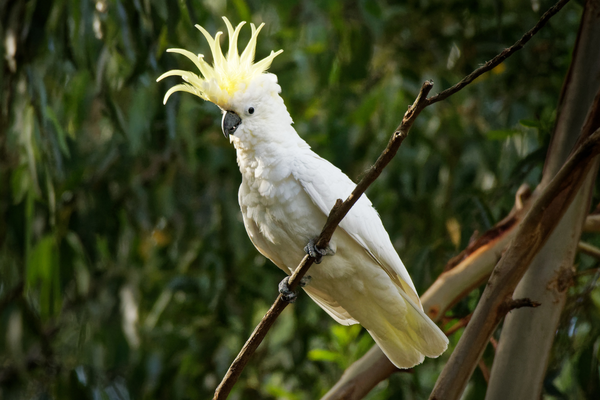
Sulphur-crested Cocky · Greater Sulphur-crested Cockatoo · White Cockatoo

Sulphur-crested Cockatoo
Lifespan
60-80+ years
Adult Size
45-55cm; 815-975g
Care Level
High
Diet

Quality large parrot or cockatoo pellets as the dietary foundation, with daily fresh fruit, vegetables and limited seed — sunflower intake must be minimal

Enclosure

Very large, thick-gauge wire cage or purpose-built outdoor aviary, with heavy-duty natural timber perches, large robust toys and a play top or gym

Temperament

One of the most eccentric, theatrical and personality-filled of all pet birds. Sulphur-Crested Cockatoos are affectionate, playful and deeply bonded

Where they come from

Natural History & Origin

The Sulphur-Crested Cockatoo is one of Australia's most familiar and abundant large parrots, found across a vast range spanning eastern and northern Australia from Cape York Peninsula through Queensland, New South Wales, Victoria and South Australia, and across the top of the Northern Territory and Western Australia. A small introduced population exists around Perth. They also occur in New Guinea, the Aru Islands and have been introduced to New Zealand, Palau and parts of Indonesia.

Sulphur-Crested Cockatoos inhabit open forest, woodland, farmland, parks and suburban environments wherever large, mature trees are present. They are conspicuous, gregarious and noisy birds, often seen in large flocks and well known to suburban Australians as visitors to garden trees and bird feeders. They are an Australian icon and are famously intelligent, mischievous and attention-demanding.

The Sulphur-Crested Cockatoo does not require a fauna keeper licence in most states and territories. Source only from licensed, captive-bred stock. Sulphur-Crested Cockatoos are one of the most commonly abandoned large birds in Australian rescue organisations — potential owners must understand the extraordinary time and commitment required before acquiring one.

Get it right early

Tips for First-Time Owners

  1. 1 The noise level of a Sulphur-Crested Cockatoo is extreme — their contact screech is among the loudest sounds produced by any pet bird and will be clearly audible to neighbours. This is a non-negotiable reality and must be fully accepted and discussed with everyone in the household before acquiring one.
  2. 2 Two to five hours of daily direct interaction is a genuine minimum requirement — a Sulphur-Crested Cockatoo that does not receive this will almost certainly develop destructive and distressing behaviours.
  3. 3 A quality calcium supplement (a quality liquid calcium supplement) provided at least three times per week in the first year is strongly recommended — calcium requirements are high in this species, particularly in growing birds.
  4. 4 This bird will almost certainly outlive you — making provisions for its future care is a genuine ethical and legal responsibility, not an afterthought.
  5. 5 In NSW, no keeper licence is required for a Sulphur-Crested Cockatoo — they are one of 41 exempt native species. Requirements vary in other states — confirm with your state wildlife authority and source from a licensed captive breeder.
Setting up the habitat

Enclosure & Husbandry

Sulphur-Crested Cockatoos require a very large, structurally robust cage. Kellyville Pets recommends a minimum cage size of approximately 165 × 75 × 190 cm. The cage must be constructed from very thick-gauge wire — standard thin-gauge cages will be destroyed by the powerful beak of a large white cockatoo. Stainless steel or very heavy-gauge powder-coated construction is recommended. All latches and fittings must be cockatoo-proof.

Provide heavy-duty natural timber perches of large diameter — a minimum of 3–5 cm is appropriate — mounted very securely, as cockatoos apply significant force to perches. A large, sturdy play top with multiple activity stations is essential for out-of-cage time. Cage placement in the main household social area is critical — isolation is one of the primary drivers of feather-destructive behaviour in this species.

Natural timber branches — eucalyptus, grevillea, bottlebrush and lilly pilly — are essential and should be provided regularly and replaced as chewed. An outdoor purpose-built aviary of at least 6m L × 2m W × 2.5m H on heavy-gauge wire is the ideal housing solution for this large, active species and allows the flight exercise and natural stimulation that is difficult to provide indoors.

What to feed

Dietary Management

Sulphur-Crested Cockatoos should be fed a quality large parrot or cockatoo pellet as the primary dietary component — approximately 60–70% of total diet. Supplement daily with a generous variety of fresh fruit and vegetables, including apple (seeds removed), pear, mango, fig, capsicum, corn, leafy greens, sweet potato and carrot. Remove fresh food after two to three hours.

Never feed lettuce, avocado, apple seeds, chocolate, caffeine, onion, garlic or processed and salted human foods. A quality large parrot or fruit and nut seed mix can supplement the diet, however sunflower seed intake should be minimal — Sulphur-Crested Cockatoos are highly prone to seed selectivity (eating only sunflower) and obesity if offered seed freely.

A quality calcium supplement such as a quality liquid calcium supplement should be provided at least three times per week, particularly in the first year. Cuttlebone and iodine bells should always be available. Vitamin supplements (a quality bird vitamin supplement) can be added to water two to three times per week. Fresh water must be changed daily. Worming every three months with a broad-spectrum bird wormer.

Day-to-day interaction

Handling & Socialisation

Sulphur-Crested Cockatoos are also famously mischievous, destructive when bored, and capable of extraordinary noise. They form intensely strong bonds with their primary carer and experience profound distress — which they express through screaming, feather destruction and self-harm — if their social and enrichment needs are not met.

Confident, consistent and daily handling is essential. Establish step-up and step-down as safety foundations using positive reinforcement from day one. Never punish or raise your voice — this species responds very poorly to negative reinforcement and will match your energy level.

Handle for two to five hours daily minimum — this is not an aspiration, it is a baseline requirement. Cockatoos deprived of this affection develop serious behavioural problems that are extremely difficult to reverse. All household members should interact with the bird regularly to prevent extreme single-person bonding. Supervised free-roaming time on a large play gym provides important physical and social stimulation beyond handling.

Did you know

Fun Facts

A Sulphur-Crested Cockatoo named Cocky Bennett, kept at a hotel in Tom Ugly's Point, Sydney, was documented to have lived over 100 years — becoming one of the most celebrated animals in Australian history and a genuine icon of the species' extraordinary longevity.

Research published in 2009 showed that a captive Sulphur-Crested Cockatoo named Snowball could synchronise its body movements to musical rhythms — demonstrating spontaneous beat induction (dancing) that was previously thought to be unique to humans and vocal learning animals.

Wild Sulphur-Crested Cockatoos have been documented teaching each other novel behaviours — including the technique of opening wheelie bins by flipping the lid with the beak, a skill that spread through Sydney's wild cockatoo population from a single learned origin point, demonstrating genuine cultural transmission of learned behaviour.

Keep them stimulated

Enrichment

Sulphur-Crested Cockatoos require the highest level of enrichment of any commonly kept Australian bird. Providing fresh native branches for chewing daily is fundamental — chewing is a primary psychological outlet for this species, and a cockatoo without appropriate chew materials will redirect this behaviour destructively onto its cage, perches and the household. Eucalyptus, grevillea, lilly pilly and bottlebrush branches are all suitable; replace as destroyed.

Rotate a very large selection of large, heavy-duty toys — chew blocks, foraging stations, puzzle feeders, swings, bells, and manipulable toys — every few days. Positive reinforcement trick training is one of the most effective forms of enrichment and significantly deepens the keeper-bird relationship. Cockatoos are documented to use tools and solve complex puzzles; this intelligence requires consistent mental challenge. Supervised outdoor access, music, household inclusion and regular handling all contribute to the enrichment programme this species demands.

What to watch for

Common Health Issues

Feather Destructive Behaviour (FDB): The most prevalent and serious welfare issue in captive Sulphur-Crested Cockatoos, driven primarily by insufficient social interaction, boredom and inadequate enrichment. Prevention is through consistent daily handling, extensive enrichment and environmental complexity — once established, FDB is extremely difficult to reverse and may require specialist avian behavioural intervention.

PBFD (Psittacine Beak and Feather Disease): An incurable viral disease causing progressive feather and beak deterioration — source from PBFD-tested breeders and protect from contact with wild populations.

Psittacosis (Chlamydiosis): Annual vet checks and hygiene are preventative.

Obesity: Common on seed-heavy diets — pellet-based diet and strict control of sunflower seeds are essential.

Heavy metal toxicity: All cage materials and toys must be zinc and lead free.

Proventricular Dilatation Disease (PDD): Source from healthy, reputable breeders.

Everything you need

Essentials Shopping List

Setup checklist

  • Very large thick-gauge wire cage — minimum 165 × 75 × 190 cm; purpose-built outdoor aviary (minimum 6m L × 2m W × 2.5m H, heavy-gauge wire, steel frame) strongly recommended
  • Cockatoo-proof locking mechanism on all cage doors
  • Heavy-duty hardwood perches (minimum 3–5 cm diameter), multiple, very securely fixed
  • Large dedicated play gym / play stand for out-of-cage time
  • Stainless steel heavy-duty food and water dishes (minimum two sets)
  • Quality large parrot or cockatoo pellets
  • Quality calcium supplement (at least 3× per week in first year)
  • Varied fresh fruit and vegetables (daily)
  • Large parrot or fruit and nut seed mix (supplement only — minimal sunflower)
  • Cuttlebone and iodine bell
  • Vitamin supplement (a quality bird vitamin supplement)
  • Broad-spectrum bird wormer (quarterly)
  • Large, heavy-duty rotating toys: chew blocks, foraging stations, puzzle feeders, swings, bells
  • Fresh native branches — eucalyptus, grevillea, bottlebrush, lilly pilly (daily or near-daily)
  • Avian-safe disinfectant
  • Annual avian vet check (ongoing)
  • Fauna keeper licence — not required in NSW but confirm with your state authority
FAQ

Commonly Asked Questions

  • How loud are Sulphur-Crested Cockatoos?

    Extremely loud. Their contact screech is one of the most powerful sounds produced by any pet bird and carries hundreds of metres. This is a defining characteristic of the species and is not something that can be trained away. It is the most important consideration before acquiring one.

  • Are Sulphur-Crested Cockatoos suitable for apartment living?

    No — their noise level, space requirements and daily time demands make apartment living impractical for both the owner and neighbours.

  • How do I tell a male from a female Sulphur-Crested Cockatoo?

    Adult females develop a coppery-red iris colour; adult males retain dark brown eyes. This distinction is only reliable in mature birds — DNA testing is the definitive method in young birds.

  • My cockatoo screams all day — how do I stop it?

    Screaming typically indicates insufficient social interaction, boredom, or inadequate enrichment. Review daily handling time, enrich the environment extensively, and ensure the bird is in a socially active part of the household. Consult a specialist avian behaviourist if the problem is severe.

  • Do I need a licence for a Sulphur-Crested Cockatoo?

    No licence is required in NSW — the Sulphur-Crested Cockatoo is listed as an exempt native species. Licensing requirements vary between states; confirm current requirements with your state wildlife authority before purchasing.

Need help?Our specialists are in-store every day to help with set up, licensing and feeding.

Visit Kellyville Pets