Care Guide6 min read

Finches

Various species
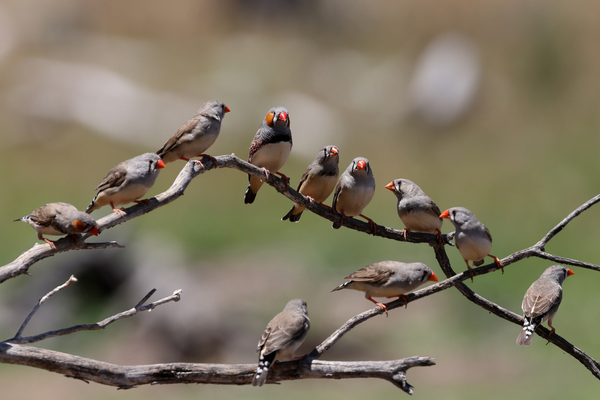
Zebra Finch (Taeniopygia guttata)
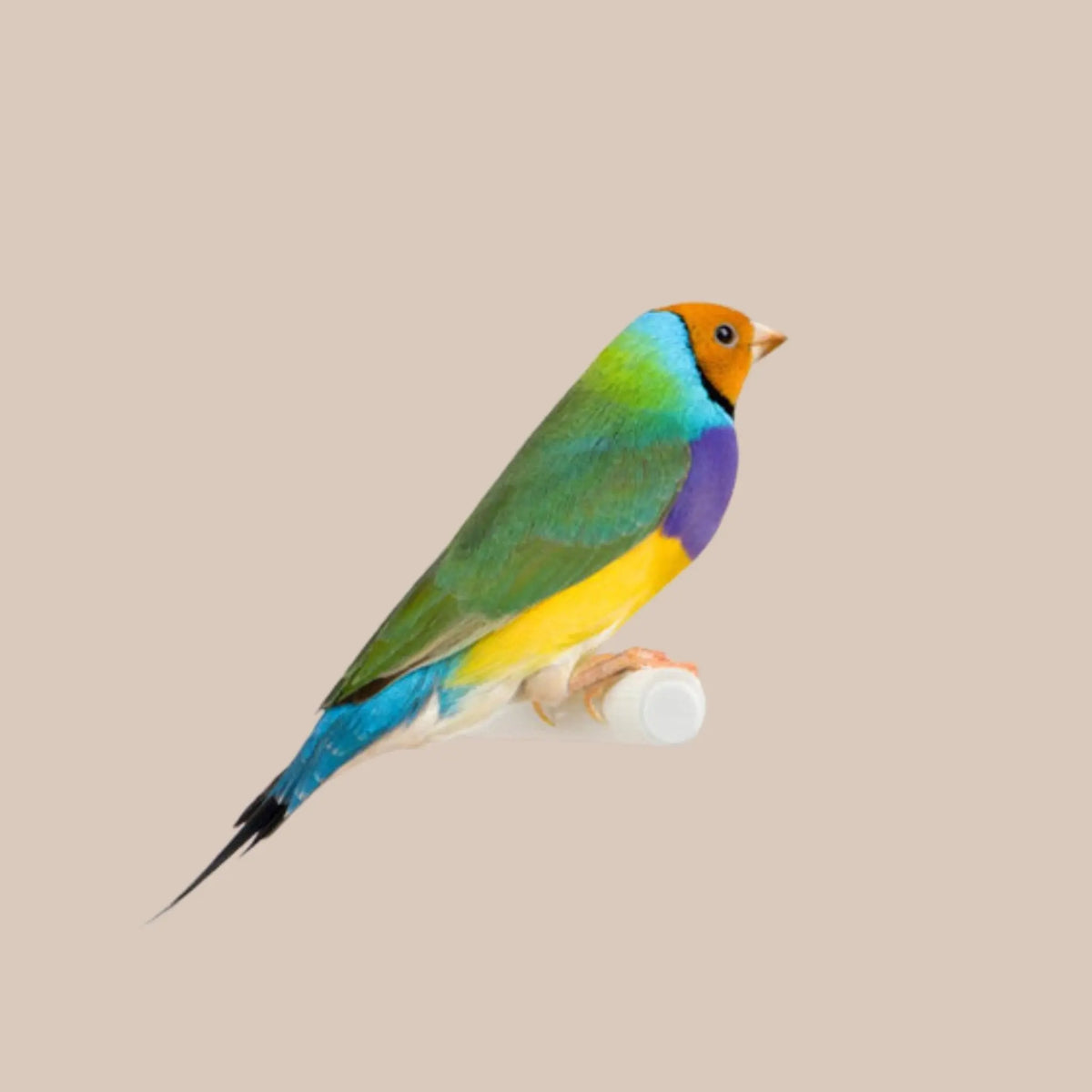
Gouldian Finch (Chloebia gouldiae)
Red-browed Finch (Neochmia temporalis)
Painted Finch (Emblema pictum): Painted Firetail
Star Finch (Neochmia ruficauda)
Diamond Firetail (Stagonopleura guttata)
Double-barred Finch (Taeniopygia bichenovii)
Long-tailed Finch (Poephila acuticauda)
Chestnut-breasted Mannikin (Lonchura castaneothorax)

Finch Care Guide
Lifespan
5-8 years
Adult Size
10-14cm; 10-20g (depending on species)
Care Level
Low
Diet

Quality canary or finch seed mix as the dietary foundation, with seeding grasses, fresh greens, egg and biscuit food, and access to grit and cuttlebone

Enclosure

Well-planted wire aviary (minimum 60cm W x 60cm D x 150cm H for a single pair), with natural branches, nesting materials and a dedicated sheltered area

Temperament

Primarily observation birds — not typically handleable. Appeal lies in natural flock behaviour, vivid colour and aviary activity

Where they come from

Natural History & Origin

There are 18 species of native Australian finch recognised within the family Estrildidae. They are found across a wide range of habitats — from tropical savanna and spinifex grassland to woodland, coastal scrub and irrigated farmland — wherever grass seeds are abundant and water sources are accessible. All Australian finches are predominantly ground or near-ground feeders on grass seeds, supplemented seasonally with insects (particularly during breeding).

Finch keeping is one of the oldest and most popular branches of Australian aviculture. Whether kept as a breeding collection or purely for observation, finches in a well-planted aviary provide a constant source of colour, movement and natural behaviour. The Zebra Finch is the most commonly kept and most forgiving species, and is universally recommended as the ideal starting point for new finch keepers. The Gouldian Finch, while breathtakingly beautiful, requires more careful management and a higher standard of hygiene than most other species.

Finch keeping does not generally require a native bird keeper licence in NSW for the most commonly kept species, including the Zebra Finch, Gouldian Finch, Star Finch, Painted Finch and Blue-faced Parrot Finch, which are all exempt from licensing requirements. Other native finch species may require a Class 1 or Class 2 Bird Keeper Licence — confirm current requirements for specific species with your state wildlife authority before purchasing. All birds must be sourced from licensed captive breeders.

Get it right early

Tips for First-Time Owners

  1. 1 Zebra Finches are the universally recommended starting point for new finch keepers — they are the hardiest, most forgiving and most readily available of all Australian finch species, and keeping them successfully builds the skills needed for more demanding species.
  2. 2 The aviary floor is the most important hygiene factor in finch keeping — a damp or dirty floor is the primary source of bacterial disease. Ensure good drainage and clean the floor frequently.
  3. 3 Never mix finches with larger, dominant species such as lorikeets, budgies or cockatiels — even a calm individual of a larger species can injure a finch accidentally or through competition.
  4. 4 Seeding grasses are the single best dietary supplement you can offer finches — source them regularly from pesticide-free areas or grow your own for year-round supply.
  5. 5 Confirm the licence status of your specific finch species with your state wildlife authority before purchasing — requirements vary significantly by species and by state.
Setting up the habitat

Enclosure & Husbandry

Finches are active, fast-flying birds that benefit greatly from space and height. Kellyville Pets recommends a minimum aviary size of approximately 60cm W x 60cm D x 150cm H (2ft x 2ft x 5ft) for a single pair; a larger flight aviary of at least 1.8m L x 0.9m W x 1.8m H is strongly preferred and provides the flight exercise and environmental complexity that best supports finch welfare and breeding success.

The aviary floor should be easy to maintain and keep clean — sand, fine gravel or a concrete base with good drainage prevents moisture accumulation, which encourages disease. Add a thick layer of native plants and shrubbery inside the aviary; any native Australian plant is generally safe. Plants provide shelter, nesting sites, foraging opportunities and visual barriers that reduce inter-bird aggression.

Provide natural branches of varying lengths, shapes and thicknesses from native species — eucalyptus, gum, grevillea, bottlebrush and lilly pilly — which allow natural chewing and foot exercise. Place food and water off the ground and away from perches to avoid faecal contamination. A covered, sheltered section of the aviary protects birds from rain, wind and temperature extremes. Nesting boxes, grass tussocks and half-open cups provide nesting options for breeding pairs.

What to feed

Dietary Management

Finches are predominantly seed eaters and should be provided with a quality finch or canary seed mix containing a variety of seeds such as French white millet, Japanese millet, plain canary, pannicum and small amounts of hulled oats. The seed mix should be fresh — check regularly and remove husks from the dish before topping up, rather than simply adding seed on top.

Live and seeding grasses are among the most important and enriching dietary supplements — branches of seeding native grasses, chickweed, milk thistle, endive and dandelion are relished and provide variety, moisture and additional nutrition. Egg and biscuit food (a soft food mixture containing protein, egg and vitamins) is particularly important during breeding and moulting periods and supports overall condition. Greens such as spinach, silverbeet, chickweed and endive can be offered daily.

Grit in small amounts assists with seed digestion. Cuttlebone provides calcium and should always be available, particularly for breeding birds. Fresh, clean water must be changed daily — finches are heavy water users relative to their size. Vitamin supplements such as a quality bird vitamin supplement can be added to water two to three times per week. Gouldian Finches have higher nutritional requirements than other finches and benefit from a more comprehensive supplementation programme; consult a specialist breeder for current recommendations.

Day-to-day interaction

Handling & Socialisation

Most finches are not suited to regular handling and should not be handled unless necessary for health checks or transfer. When handling is required, use a soft, cupped hand movement and work quickly but calmly. Finches are very fast and can easily injure themselves by flying into aviary walls or cage sides when panicked.

For keepers who want a more interactive experience from a finch species, the Zebra Finch is the most suitable — some individuals become remarkably bold and will feed from the hand. Consistent, calm presence near the aviary over time builds confidence in the flock. Some individual birds, particularly young hand-raised finches, can become relatively tame, but this is the exception rather than the rule.

Did you know

Fun Facts

The Gouldian Finch is widely considered one of the most beautiful birds in the world and has been described by Sir David Attenborough as 'the most colourful bird on Earth' — remarkably, the wild population was once critically depleted due to trapping for the pet trade but has recovered significantly through captive breeding and protection programmes.

The Zebra Finch — Australia's most popular cage bird — has contributed more to our scientific understanding of birdsong learning than any other species. Decades of research into how Zebra Finches learn songs from their fathers has provided fundamental insights into the neuroscience of vocal learning, with direct relevance to understanding human language acquisition.

In the wild, Gouldian Finches can exist in three distinct head colour forms — red-headed (most common), black-headed, and yellow-headed (rarest). The head colour is genetically determined and is unrelated to age, sex or health status.

Keep them stimulated

Enrichment

A well-designed, planted aviary is itself the most important form of enrichment for finches. The presence of live native plants, varied branches at different heights, and the company of a flock all provide the environmental complexity and social interaction that finches need. Regularly rotating fresh branches from native species adds novelty and encourages natural chewing and perching behaviour.

Live seeding grasses hung or scattered throughout the aviary stimulate natural foraging behaviour — the act of searching for, selecting and husking seeds is genuinely enriching and occupies finches for extended periods. Providing a shallow, clean bathing dish — replenished daily — is an important enrichment item; most finch species are enthusiastic bathers. Offering egg and biscuit food in a separate dish during the breeding season provides both nutritional support and foraging variety.

What to watch for

Common Health Issues

Air sac mite (Sternostoma tracheacolum): A microscopic parasite that affects the respiratory system, causing open-mouth breathing, tail bobbing and respiratory distress. It is a serious and potentially fatal condition requiring veterinary treatment with appropriate anti-parasitic medication. Gouldian Finches are particularly susceptible. Prevent through good hygiene and quarantine of new birds.

Scaly face mite (Cnemidocoptes): Causes crusty growths on the beak and face; treatable by a vet if caught early.

Psittacosis (Chlamydiosis): Can affect all finch species; annual vet checks and good hygiene are preventative.

Bacterial infections: Common in overcrowded, poorly maintained aviaries — maintain good hygiene, adequate space and ventilation.

Moulting problems: Incomplete or prolonged moults are often linked to nutritional deficiencies — ensure a complete, varied diet with protein supplementation during moulting periods.

E-coli and coccidiosis: Can spread rapidly in wet, dirty conditions — maintain a dry, clean aviary floor and change water daily.

Everything you need

Essentials Shopping List

Setup checklist

  • Wire flight aviary — minimum 60 x 60 x 150 cm (for a pair); 1.8m L x 0.9m W x 1.8m H or larger strongly preferred
  • Aviary floor covering — sand, fine gravel or concrete with good drainage
  • Natural timber perches and branches (eucalyptus, grevillea, bottlebrush)
  • Quality finch or canary seed mix
  • Seeding grasses (pesticide-free — regular supply)
  • Egg and biscuit food (especially during breeding/moulting)
  • Fresh leafy greens (chickweed, endive, dandelion, silverbeet)
  • Bird grit (small amounts)
  • Cuttlebone
  • Vitamin supplement
  • Shallow bathing dish
  • Food and water dishes (positioned off ground)
  • Nesting boxes or wicker nest baskets
  • Nesting grasses and soft nesting material
  • Native plants or shrubbery for the aviary
  • Avian-safe aviary disinfectant
  • Annual vet check (especially for Gouldian Finches)
  • Fauna keeper licence (species-dependent — confirm with state wildlife authority)
FAQ

Commonly Asked Questions

  • Can I keep different finch species together?

    Many species can be successfully mixed in a large, planted aviary — Zebra Finches, Gouldian Finches, Double-barred Finches, Long-tailed Finches and Diamond Doves are generally compatible. Avoid mixing with dominant or aggressive species. Monitor closely when introducing new birds.

  • How do I know if my finch is male or female?

    Zebra Finch males have characteristic orange cheek patches, chestnut flanks with white spots, and a striped bib that females lack. In Gouldian Finches, males have more vivid colouring overall. Sexing is species-specific and not always visually reliable — DNA testing provides a definitive answer.

  • Do Gouldian Finches need special care?

    Yes — Gouldian Finches are more sensitive than most other finch species and require higher hygiene standards, better nutrition, and more careful disease monitoring. They are best kept by keepers with prior finch experience. Air sac mite prevention and treatment is a particular priority.

  • Do I need a licence for my finches in NSW?

    It depends on the species. Zebra Finch, Gouldian Finch, Star Finch, Painted Finch and Blue-faced Parrot Finch are exempt from licence requirements in NSW. Other native finch species require a Class 1 or Class 2 Bird Keeper Licence — confirm with the NSW wildlife authority.

  • How many finches should I keep together?

    Finches are flock birds and should not be kept alone. A minimum of two to three pairs is recommended; a colony of six or more is ideal in a sufficiently large aviary.

Need help?

Our specialists are in-store every day to help with setup, licensing and feeding.

Visit Kellyville Pets →