Care Guide6 min read

Guinea Pig

Cavia porcellus
Cavy · Piggy · Guineapig

Lifespan
5-7+ years
Adult Size
2-35cm; 100-1200g
Care Level
Medium
Diet

Quality guinea pig pellets (Vitamin C-fortified), Oaten and Western Timothy hay (available at all times), and daily fresh Vitamin C-rich vegetables

Enclosure

Spacious wire or solid-sided enclosure (minimum 120cm L x 60cm W for two guinea pigs) with Oaten or Timothy Hay, bedding substrate, a hide and fresh water; no wire flooring

Temperament

Gentle, social and vocal. Communicates through wheeks, rumbles and purrs. Calm and characterful with regular handling

Where they come from

Natural History & Origin

The domestic guinea pig is descended from wild cavy species native to the Andean region of South America, particularly the highlands of Bolivia, Colombia, Ecuador and Peru. They were domesticated by Andean peoples over 3,000 years ago, initially as a food source and for ritual use; they were introduced to Europe by Spanish explorers in the 16th century and have been bred as companion animals ever since.

Guinea pigs are gregarious, gentle animals that live in small family groups in the wild and communicate through a distinctive range of vocalisations — the most characteristic being the high-pitched 'wheek' or 'squeal' they produce in response to excitement, anticipation of food, or to seek attention. Their calm, unhurried temperament and tolerance of gentle handling make them particularly suitable as pets for children and families.

Guinea pigs are entirely herbivorous and, like humans, are unable to produce their own Vitamin C. This is a critically important dietary consideration — chronic Vitamin C deficiency causes scurvy, which is a common and entirely preventable health problem in captive guinea pigs. Fresh Vitamin C-rich food must be provided daily.

Get it right early

Tips for First-Time Owners

  1. 1 Guinea pigs must never be kept alone — they are social animals and isolation causes chronic stress, even in a pet that appears outwardly calm. Keeping same-sex pairs or groups is essential for their wellbeing.
  2. 2 Fresh Vitamin C is non-negotiable — guinea pigs cannot produce their own and deficiency causes scurvy. Daily capsicum, broccoli, kale or parsley provides excellent Vitamin C supplementation.
  3. 3 Hay must be available at all times and should make up the majority of the diet — it is essential for dental health, gut health and preventing GI stasis. Running out of hay is one of the most common and easily avoidable welfare failures in guinea pig keeping.
  4. 4 Avoid wire-floored cages — guinea pig feet and ankles are prone to injury and sores (pododermatitis) on wire. Solid-based enclosures with appropriate bedding are essential.
  5. 5 Guinea pigs are extremely susceptible to heat stress — never leave them in direct sun or in a room above 28°C without cooling. On hot days, a frozen water bottle wrapped in a cloth provides a safe cooling surface.
Setting up the habitat

Enclosure & Husbandry

Guinea pigs need more space than most people expect. A minimum enclosure size for two guinea pigs is 120cm L x 60cm W; for three or more, 150cm L x 60cm W is a minimum. Wire-floored cages must be avoided — guinea pigs have delicate feet and ankles that are easily injured on wire; solid-based cages with appropriate bedding are essential.

Indoor C&C (Coroplast and Cubes) grids enclosures are popular and allow easy customisation of size and layout, which is strongly recommended as they generally provide more space than standard hutches. Outdoor hutches must be weatherproof, shaded from direct sun, protected from rain, and securely constructed to prevent access by dogs, cats and foxes.

Bedding options include paper-based bedding (e.g. recycled paper pulp bedding), kiln-dried wood shavings, such as aspen or pine (cedar or inappropriately processed pine release aromatic oils which can cause respiratory problems), or fleece liners (washable and economical long-term). Hay should also be abundantly available as floor covering, which encourages natural foraging. A snug igloo hide or enclosed hut provides essential shelter and security. Guinea pigs are very susceptible to heat stress — enclosures must be well ventilated and never placed in direct sun; provide a cool area and a frozen water bottle on hot days.

What to feed

Dietary Management

Guinea pigs require a diet with three core components: hay, pellets and fresh vegetables. Hay should be available at all times and constitute approximately 70% of the total diet — it is essential for healthy digestion, dental wear (guinea pig teeth grow continuously) and gut motility.Oaten and Western Timothy Hay is the recommended staple for adult guinea pigs; Lucerne (Alfalfa) hay is higher in calcium and protein and is appropriate for young guinea pigs and pregnant or nursing sows, but should not be the sole hay for healthy adults.

Quality guinea pig pellets — such as a quality guinea pig pellet — should be offered in a ceramic bowl daily. Choose a pellet that is Vitamin C-fortified, as Vitamin C degrades rapidly in hay and seeds. A standard adult portion is approximately 1/8 cup per 500 g of body weight per day.

Fresh vegetables rich in Vitamin C should be offered daily. Excellent choices include capsicum (very high in Vitamin C), broccoli, kale, parsley, spinach, dandelion greens, and small amounts of carrot and apple (no seeds). Avoid iceberg lettuce (no nutritional value), celery (choking risk from stringy fibres), rhubarb, potato, tomato leaves, avocado, and onion. Fruit should be offered only occasionally due to high sugar content. Fresh water must be available at all times — a heavy ceramic bowl is more hygienic than a sipper bottle and most guinea pigs prefer to drink from a bowl. A salt lick mineral stone and a mineral stone should be provided.

Day-to-day interaction

Handling & Socialisation

Always support a guinea pig's full body when picking them up — slide one hand under the chest and front legs, and support the hindquarters with the other hand. Never grab by the back, scruff or tail (guinea pigs do not have a useful scruff, and their spine can be injured by unsupported lifting). Guinea pigs should always be handled close to the ground or seated, as they can be seriously injured by a fall.

Handle regularly and calmly from a young age. Place the guinea pig on your lap or a soft surface and allow them to explore at their own pace. Avoid sudden movements and loud noises. Children should always be supervised; teaching children to sit on the floor when holding a guinea pig is the safest approach.

Guinea pigs communicate through a rich range of vocalisations — the wheek or squeal (excitement and food anticipation), rumbling or purring (contentment or warning, depending on context), chutting (happy exploration sounds), and teeth chattering (a warning signal). They are most active during the early morning and late afternoon. With regular, calm handling, guinea pigs become confident and may follow their keeper around, solicit attention, and show clear signs of recognising familiar people.

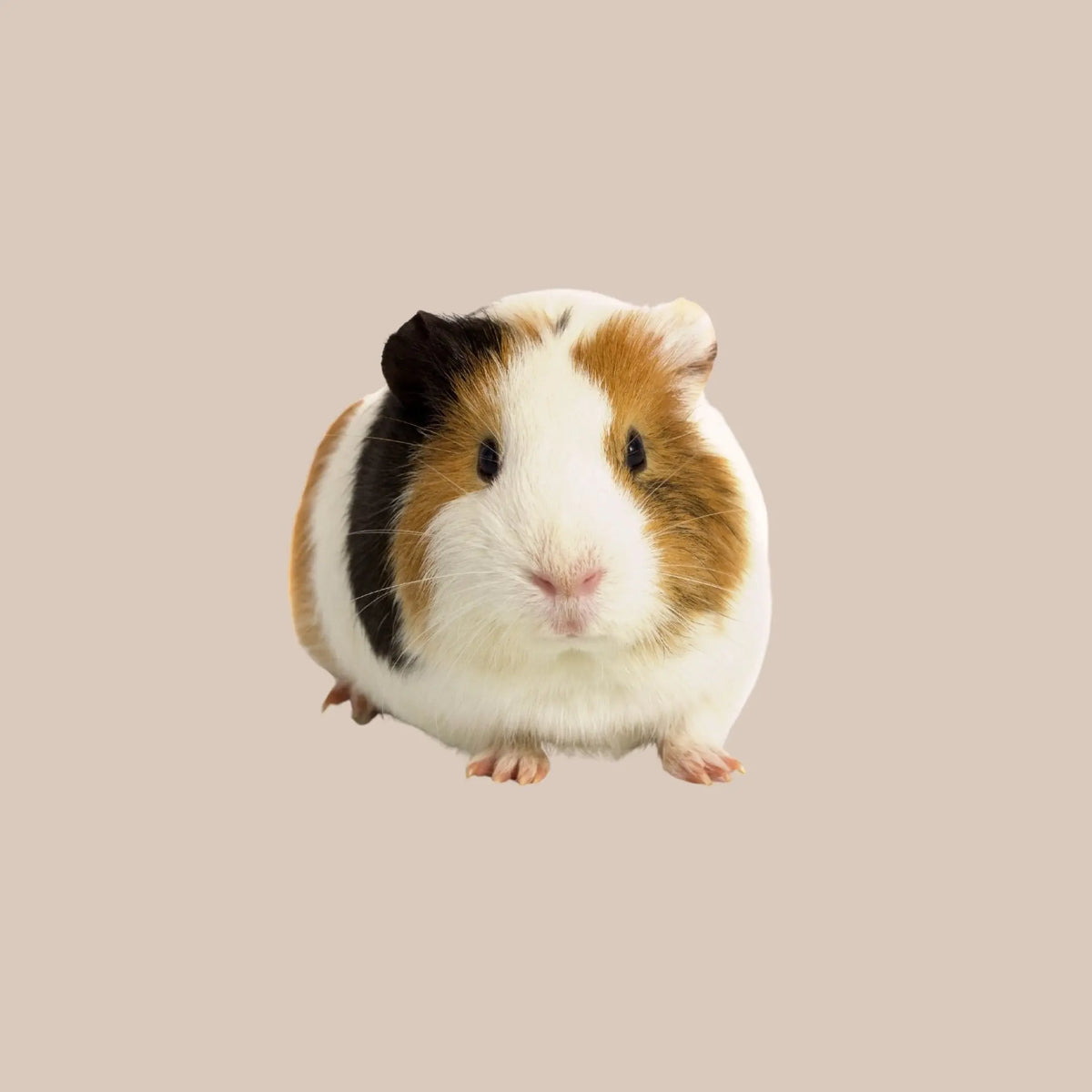
Standard Shorthair Guinea Pig - Kellyville Pets
AVAILABLE IN-STORE

Standard Shorthair Guinea Pig

Did you know

Fun Facts

Guinea pigs are one of very few non-primate mammals that, like humans, cannot synthesise their own Vitamin C and must obtain it entirely through diet — a shared metabolic quirk that makes the dietary parallels between guinea pig and human care genuinely unusual.

Guinea pigs have a distinctive behaviour called 'popcorning' — a spontaneous, joyful leaping and twisting motion performed when they are happy and excited — a clear and endearing behavioural indicator of positive welfare.

Despite their name, guinea pigs have no connection to Guinea (the African country) and are not pigs. The most plausible explanation for the 'guinea' part of the name is a corruption of 'Guiana' (a South American region), while the 'pig' may refer to the animals' pig-like squealing vocalisations or their rounded body shape.

Keep them stimulated

Enrichment

Guinea pigs are active and benefit from environmental variety and opportunities to express natural behaviours. Providing a dedicated floor time area — a playpen or a small, enclosed room space — allows important exercise and exploration that a standard enclosure cannot provide. Scatter food items (pieces of vegetable, hay pellets) around the play area to encourage natural foraging and searching.

Provide a variety of safe toys — wooden chew toys (willow balls, wooden bridges), cardboard tunnels and boxes, hay-woven treat balls and small foraging wheels. Natural fresh branches from safe species (apple, willow, pear) provide both chewing enrichment and dental wear. A foraging mat of hay scattered with pellets and vegetable pieces mirrors natural feeding behaviour. Guinea pigs are naturally social and the presence of same-sex companions is itself the most fundamental form of enrichment — a lone guinea pig, however well fed and housed, is a stressed guinea pig.

What to watch for

Common Health Issues

Scurvy (Vitamin C deficiency): The most common preventable health problem in guinea pigs. Caused by inadequate Vitamin C in the diet. Signs include weight loss, lethargy, swollen joints, rough coat and reluctance to move. Prevent entirely with daily Vitamin C-rich fresh vegetables and Vitamin C-fortified pellets.

Dental disease (malocclusion): Guinea pig teeth grow continuously and can become misaligned, leading to inability to eat. Ensure adequate hay at all times and provide safe chews. Regular vet checks allow early detection.

Respiratory infections: Signs include sneezing, nasal discharge, laboured breathing and lethargy. Often triggered by draughts, damp bedding or stress.

Parasites (fur mites): Cause intense itching, hair loss and skin crusting. Treat with veterinary-recommended small animal parasite spray.

Gut stasis (GI stasis): Life-threatening cessation of gut movement, most often triggered by insufficient hay in the diet. Ensure hay is available at all times.

Bladder stones (uroliths): More common in females and linked to diets too high in calcium (excess Lucerne hay). Any guinea pig displaying pain, blood in urine or straining to urinate should be assessed by a vet promptly.

Everything you need

Essentials Shopping List

Setup checklist

  • Spacious solid-based enclosure — minimum 120 x 60cm for two guinea pigs; 150 x 60cm or larger preferred
  • Paper-based bedding (recycled paper pulp bedding) or kiln-dried aspen shavings
  • Oaten and Western Timothy Hay (permanent large supply)
  • Lucerne Hay (for young, pregnant or nursing guinea pigs only)
  • Quality guinea pig pellets
  • Ceramic food bowl
  • Heavy water bowl (or sipper bottle as backup)
  • Igloo hide or enclosed hut
  • Salt lick mineral stone
  • Wooden chew toys (willow ball, wooden bridge)
  • Hay-woven treat ball
  • Cardboard tubes or tunnels
  • Small animal-safe disinfectant
  • Small animal wormer (every 3 months)
  • Small animal parasite spray (mites, lice, fleas)
  • Soft brush (weekly grooming for short-haired breeds)
  • Nail clippers
  • Travel carrier
  • Annual vet check
FAQ

Commonly Asked Questions

  • Do guinea pigs need companions?

    Yes — guinea pigs are social animals that experience genuine psychological stress when housed alone. A same-sex companion (two sows, or two boars introduced young) is strongly recommended. Two guinea pigs are not significantly more work than one.

  • How much Vitamin C does a guinea pig need daily?

    Adult guinea pigs need approximately 10–30 mg of Vitamin C per day; pregnant or unwell animals may need more. This is easily provided through a generous portion of capsicum, broccoli, kale or parsley daily. Do not rely on water-soluble Vitamin C drops, which degrade rapidly.

  • Can guinea pigs live with rabbits?

    This is not recommended. Rabbits can injure guinea pigs through kicking, and their communication styles and social needs are incompatible. They also have different dietary requirements and rabbits can carry Bordetella bacteria, which can cause respiratory disease in guinea pigs.

  • How do I know if my guinea pig is unwell?

    Signs to watch for include lethargy, reduced appetite, weight loss, changes in droppings (fewer, smaller or misshapen), sneezing, nasal discharge, rough coat, difficulty walking, hunched posture or abnormal tooth grinding. Any of these signs warrant a vet visit.

  • How often do I need to clean the cage?

    Spot-clean daily to remove soiled bedding and old food; replace all bedding and thoroughly clean the enclosure with a small animal-safe disinfectant once a week.

Need help?Our specialists are in-store every day to help with set up, licensing and feeding.

Visit Kellyville Pets