


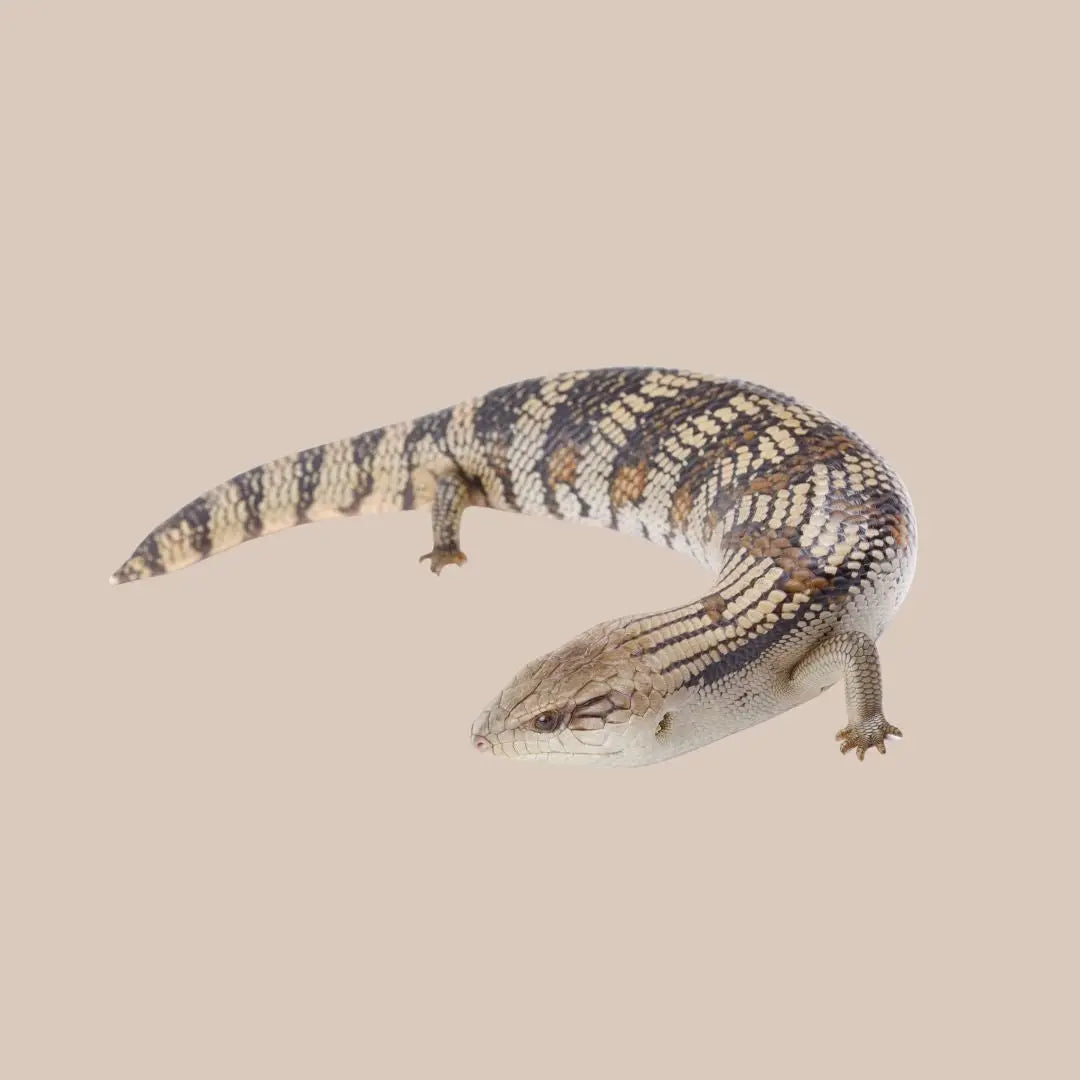
Eastern Blue-Tongue Skink
Tiliqua scincoides scincoides
Download the full care guide (PDF)
Free & Print-ready

20-30 years

40-60cm

Low


Where they come from
Natural History & Origin


Get it right early
Tips for First-Time Owners
- 1 Provide a deep burrowing substrate of at least 10–15 cm — Eastern Blue-Tongues are natural burrowers and a shallow substrate causes chronic, low-grade stress that is easy to prevent.
- 2 Vary the diet substantially at every meal — a blue-tongue fed a narrow diet, even a seemingly healthy one, will develop nutritional deficiencies over time; variety of vegetables, proteins and occasional fruit is the most important dietary principle.
- 3 A T5 HO 10% UVB lamp is strongly recommended and supports natural vitamin D₃ synthesis, activity levels and long-term health — it is an investment that pays dividends throughout the animal's life.
- 4 Never allow your blue-tongue unsupervised access to other household pets — dogs and cats can injure a skink very quickly, even without hostile intent.
- 5 Obtain a valid fauna keeper licence before purchasing and source your animal only from a licensed, reputable captive breeder.
Setting up the habitat
Enclosure & Husbandry
What to feed
Dietary Management
Day-to-day interaction
Handling & Socialisation
Find your next best friend
Browse all Reptiles
Our Available Reptiles


Did you know
Fun Facts
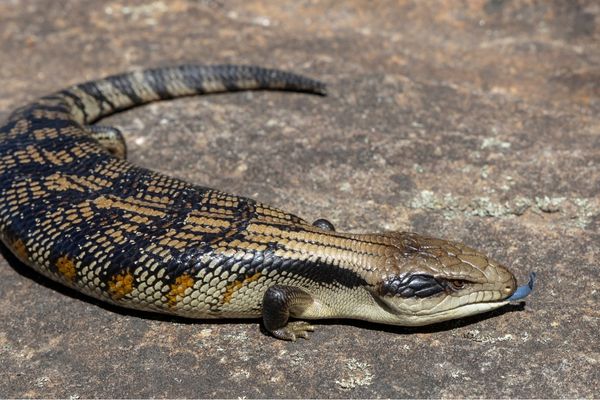
The blue tongue serves as a genuine aposematic display — the vivid, unexpected colour contrasting sharply with the pink mouth interior is designed to startle or alarm a predator in the brief moment required to escape. It is completely harmless.
Eastern Blue-Tongues are viviparous — they give birth to fully formed, independent live young rather than laying eggs. Litters of six to sixteen young are born after a gestation period of approximately three to five months, with each youngster fully capable of fending for itself from birth.
Unlike many lizard species, Eastern Blue-Tongue tails do not regenerate — a tail lost to a predator, a door or an overzealous pet is lost permanently, leaving a permanently blunted end. This makes careful handling and household safety particularly important.
Keep them stimulated
Enrichment
What to watch for
Common Health Issues
Everything you need
Essentials Shopping List
Setup checklist
- Timber or glass enclosure — minimum 120 × 60 × 45 cm; 150 × 60 × 45 cm strongly preferred
- Escape-proof, secure ventilated lid
- Halogen or incandescent basking globe (50–75W)
- Quality thermostat
- T5 HO 10% UVB tube and deep reflector fitting
- Lighting timer
- Digital dual-probe thermometer and infrared temperature gun
- Flat basking rock or slate tile
- Two hides (warm and cool end)
- Deep burrowing substrate — 10–15 cm depth (cypress mulch, coconut fibre or soil/sand mix)
- Shallow water dish
- Food dish (ceramic or glass)
- Calcium supplement powder (without D₃ — regular use)
- Multivitamin supplement (weekly use)
- Varied fresh vegetables (ongoing supply)
- Lean protein source (grain-free tinned dog/cat food, lean mince)
- Live feeder insects (for dietary variety)
- Reptile-safe disinfectant
- Fauna keeper licence (state-specific)
READY TO SET UP
Browse all
Shop the Essentials

Save 25%
Live Black Soldier Fly Larvae

Save 25%
Live Woodies - Pisces Enterprises

Springtails Clean Up Crew
from$16.49
View →

Lizard Veggie Mix
from$6.99
View →

Isopod Clean Up Crew
from$17.49
View →

Exo Terra Intense Basking Spot
from$19.99
View →

Live Silkworms
from$16.99
View →

Get Your Pet Right Day Basking Heat Light
from$17.49
View →
FAQ
Commonly Asked Questions
-
Can I keep two Eastern Blue-Tongue Skinks together?
-
My blue-tongue is hissing, flattening its body and showing its tongue — is it sick?
-
How do I tell a male from a female Eastern Blue-Tongue?
-
Can blue-tongues eat fruit?
-
Is a licence required to keep an Eastern Blue-Tongue in Australia?
Learn more
See more care guides Read about other species
No articles match that search. Try a different word.


Need help?Our specialists are in-store every day to help with set up, licensing and feeding.
Visit Kellyville Pets